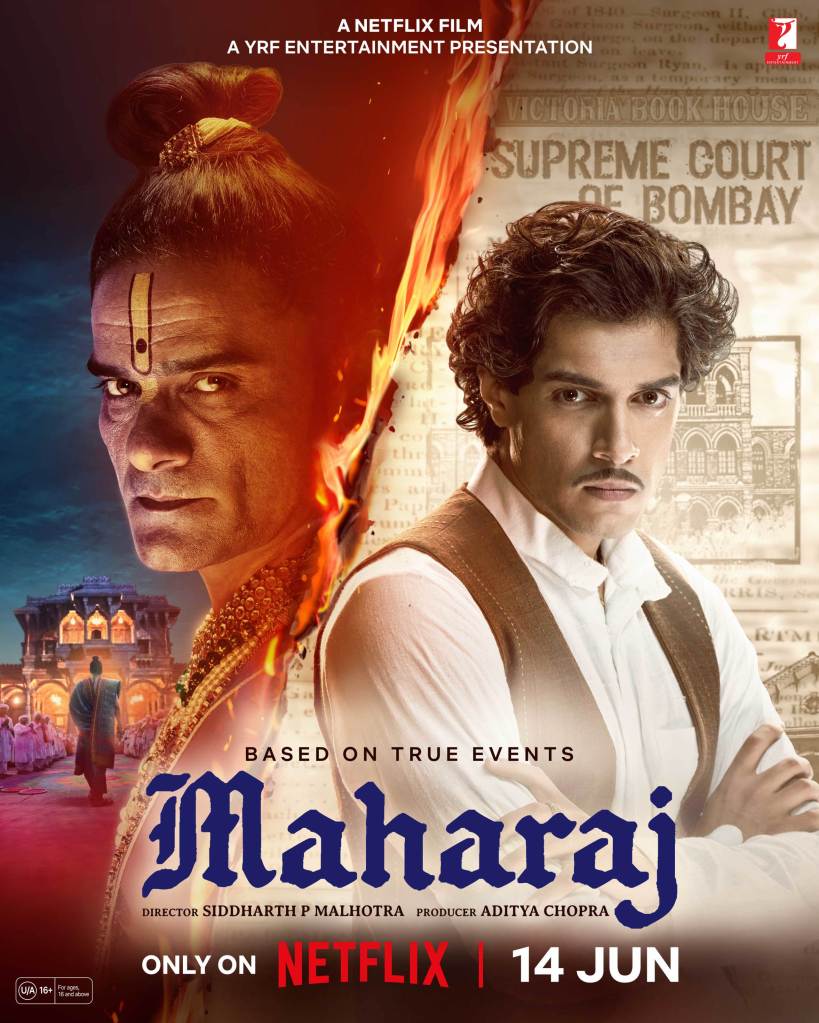
Title: Maharaj
Producer: Aditya Chopra
Director: Siddharth P. Malhotra
Cast: Junaid Khan, Sharvari Wagh, Jaideep Ahlawat, Shalini Pandey
Genre: Historical Drama
Summary
“Maharaj,” produced by the illustrious Aditya Chopra, marks a significant addition to the pantheon of historical dramas in Indian cinema. Directed by Siddharth P. Malhotra, the film embarks on a captivating journey into pre-independent India, focusing on the indomitable spirit of a young journalist challenging the entrenched structures of power and privilege. With a cast led by Junaid Khan, Sharvari Wagh, Jaideep Ahlawat, and Shalini Pandey, “Maharaj” aims to balance opulent storytelling with a socially conscious narrative. However, as with any cinematic endeavor, it has its share of strengths and weaknesses. This review delves into both aspects to provide a comprehensive analysis.
Plot and Script
The narrative of “Maharaj” is set in the late 19th century, a time when India was under the yoke of British colonial rule and various princely states. The film centers around Junaid Khan’s character, a young, idealistic journalist named Karsan Das who is committed to unveiling the truth and fighting for justice. His journey leads him to confront a powerful and corrupt maharaja, portrayed by Jaideep Ahlawat. Alongside him is Sharvari Wagh, playing a spirited activist who supports his quest for justice.
Positives:
- Engaging Storyline: The plot is well-crafted, weaving together historical facts and fictional elements to create an engaging narrative. The scriptwriters have done a commendable job in maintaining the balance between drama and historical authenticity.
- Character Development: The film excels in character development, particularly with the main characters though Kishori played by Shalini Pandey could have been better developed.
- Historical Context: The incorporation of historical elements is seamless, providing an insightful look into the socio-political climate of the time. The film does not shy away from portraying the harsh realities of colonial rule and the oppressive practices of some princely states.
Negatives:
- Predictability: While the storyline is engaging, it does fall into predictability at times. Some plot twists and resolutions are foreseeable, which slightly diminishes the suspense.
- Pacing Issues: The film’s pacing is uneven in parts. While certain scenes are gripping and fast-paced, others tend to drag, particularly in the second half.
Performances
Positives:
- Junaid Khan: In his debut role, Junaid Khan delivers a promising performance. He portrays Karsan’s idealism and determination convincingly, showing a range of emotions from fiery passion to some vulnerable moments.
- Sharvari Wagh: Sharvari brings a blend of grace and strength to her character. Her chemistry with Junaid is palpable, and her performance adds depth to the narrative.
- Jaideep Ahlawat: Jaideep’s portrayal of the Maharaj is one of the highlights of the film. He embodies the character with a menacing presence, capturing both the charisma and the cruelty of his role.
- Shalini Pandey: In a supporting role, Shalini adds nuance to the story. Her performance, though less prominent, is impactful and contributes to the overall emotional weight of the film.
Negatives:
- Inconsistencies in Performance: Certain scenes suffer from overacting, which detracts from the film’s overall impact. I felt that Junaid’s long court speech could have benefited from a bit more control.
- Character Depth: While the protagonists are well-developed, some secondary characters lack depth. They serve more as plot devices rather than fully fleshed-out individuals, which can make certain interactions feel superficial.
Direction and Cinematography
Positives:
- Siddharth P. Malhotra’s Direction: Malhotra’s direction is commendable. He successfully captures the essence of the era, blending historical authenticity with cinematic flair. His vision for the film is clear and well-executed.
- Visual Splendor: The cinematography is breathtaking. The film’s visual appeal is heightened by stunning shots of palaces, vibrant marketplaces, and the stark realities of rural India. Each frame is meticulously crafted, contributing to the film’s grandeur.
- Attention to Detail: The set design, costumes, and props are meticulously detailed, enhancing the film’s authenticity. The rich cultural tapestry of the period is vividly brought to life, immersing the audience in the historical setting.
Negatives:
- Overuse of Dramatic Elements: At times, the direction leans too heavily on dramatic elements, which can feel exaggerated. Some scenes are overly dramatized, potentially alienating viewers who prefer subtlety.
- Inconsistent Tone: The film occasionally struggles with maintaining a consistent tone. While it aims to blend drama with historical realism, the shifts between these elements are not always smooth.
Music and Sound
Positives:
- Complementary Soundtrack: The soundtrack is a perfect complement to the film’s narrative. Composed by a talented ensemble, the music is rooted in classical Indian tunes, elevating the emotional impact of the story.
Negatives:
- Overwhelming Score in Parts: While the background score is generally effective, there are instances where it feels overwhelming. Certain scenes are accompanied by overly loud music, which can distract from the dialogue and action.
- Lack of Memorable Songs: Despite the overall quality of the music, the film lacks truly memorable songs. While the compositions are fitting, they do not leave a lasting impression on the audience.
Themes and Impact
Positives:
- Social Relevance: “Maharaj” delves deep into themes of justice, integrity, and the timeless battle between the powerful and the oppressed. These themes resonate with contemporary issues, making the film relevant despite its historical setting.
- Encourages Reflection: The film encourages viewers to reflect on the past while drawing parallels to present-day societal structures. It prompts important questions about power, privilege, and the fight for justice.
- Inspirational Message: The story of Karsan’s unwavering quest for truth and justice is inspirational. It serves as a reminder of the importance of standing up against corruption and oppression, regardless of the odds.
Negatives:
- Didactic Moments: While the film’s themes are impactful, there are moments where the messaging feels didactic. Certain dialogues and scenes come across as preachy, which can detract from the overall storytelling.
- Simplistic Depictions: The film occasionally resorts to simplistic depictions of complex issues. While it addresses important themes, it sometimes lacks the depth and nuance needed to fully explore these topics.
Conclusion
“Maharaj” is a compelling addition to the canon of historical dramas in Indian cinema. Aditya Chopra’s vision, combined with Siddharth P. Malhotra’s direction and stellar performances from the cast, makes it a significant and memorable film. The movie’s strengths lie in its engaging storyline, strong performances, and stunning visuals. It offers a powerful narrative that resonates with contemporary themes of justice and integrity, encouraging viewers to reflect on historical and present-day issues.
However, the film is not without its flaws. Predictability in the plot, pacing issues, unnecessary songs and occasional inconsistencies in performance and tone are notable drawbacks. Additionally, the film’s messaging can feel overly didactic at times, and some characters lack depth.
Despite these shortcomings, “Maharaj” succeeds in delivering an impactful cinematic experience. It is a testament to the enduring spirit of resistance and the quest for truth, making it a film worth watching for its narrative strength, visual splendor, and powerful performances.
 Honest Reviews