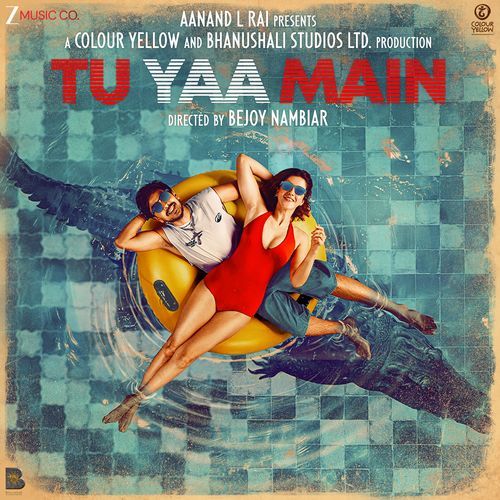
Tu Yaa Main-Movie Review (Netflix)

So I finally watched Tu Yaa Main on Netflix—after seeing it all over social media and mentally bookmarking it as “I’ll get to it eventually.”

Also, I’ll admit, I went in with a slight bias. The male lead, Adarsh Gourav, has been a favourite ever since The White Tiger. So there was already some goodwill in place before the film even began.


The Setup: Algorithm meets Awaaz

The film opens squarely in Gen Z territory.

Shanaya Kapoor plays a polished, social media influencer—someone who looks like she lives inside a perfectly curated grid. Opposite her is Adarsh, a boy from Nala Sopara, an aspiring Marathi rapper who carries both grit and vulnerability in equal measure.

It’s a tale as old as time, just updated with WiFi:
she’s aspirational, he’s grounded; he falls first, she hesitates; he persists, she slowly gives in.

Predictable? Yes. But not entirely without charm.


The Love Story: Familiar, but watchable

The romance plays out along expected lines—awkward silences, lingering glances, conversations that try to sound profound and occasionally succeed.

Adarsh Gourav does a lot of the heavy lifting here. There’s a natural sincerity to him that makes even the more cliché moments feel believable. Shanaya Kapoor, to her credit, grows into the role and finds her footing as the film progresses.

You’re not deeply invested, but you’re not disengaged either. It sits comfortably in that middle ground.


The Turn: When life gets real

Just as the film settles into its love story rhythm, it throws in a curveball—pregnancy.

And suddenly, we’re in decision-making territory:
keep the baby, don’t keep the baby, figure it out somewhere far away from reality.

Which, in cinematic logic, means Goa.

Because clearly, if you’re confused about life, love, or responsibility, Goa is where clarity magically appears.


The Swerve: Enter the crocodile

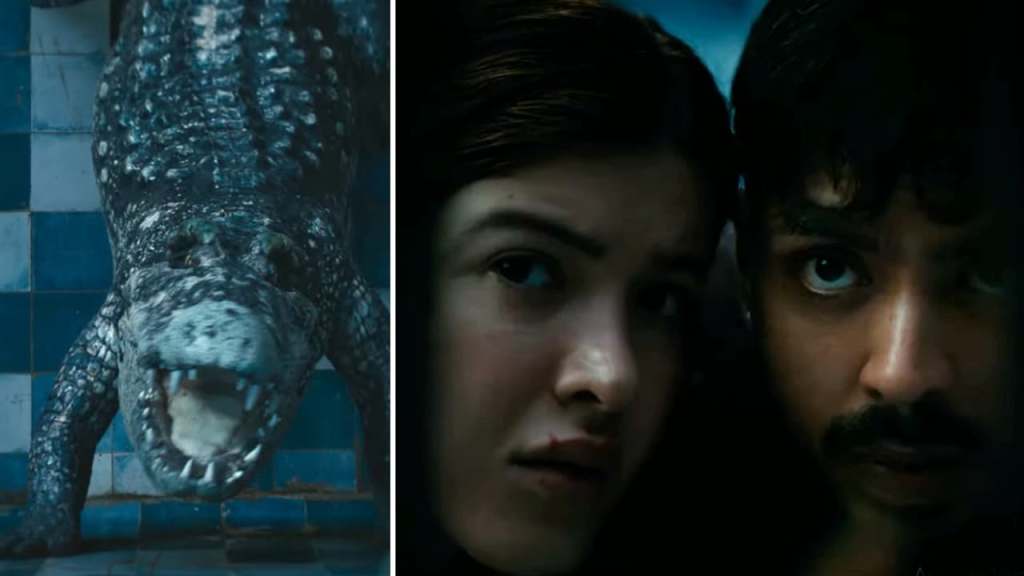
And then the film takes a sharp, almost hilarious left turn.

A crocodile.

Yes, an actual, full-blown survival situation involving a crocodile.

What started as a relationship drama now becomes part-thriller, part-survival story. The two are suddenly navigating danger, fear, and yes, still discussing their unborn child in between.

It’s tonally bizarre, but also strangely compelling. You don’t quite know whether to take it seriously or just go along for the ride.


The Identity Crisis: What is this film, really?

That’s the central issue.

Tu Yaa Main can’t quite decide what it wants to be:
a Gen Z romance, a commentary on responsibility, or a survival thriller.

Instead, it tries to be all three.

And while that could have been a mess, it somehow remains watchable—largely because of the performances and the sheer unpredictability of where it’s going.


Performances: Holding it together

Adarsh Gourav is easily the standout. He brings depth, restraint, and a certain lived-in quality that grounds the film even when the narrative goes off track.

Shanaya Kapoor shows promise and improves as the film unfolds, especially in the more emotionally charged scenes.

Together, they manage to keep the film from completely losing its balance.


The Ending: Closure not included

Without giving too much away, the film ends on a note that feels… incomplete.

They survive. They grow closer. But the central question—the baby—is left hanging.

It’s less of an ending and more of a pause, as if the film itself isn’t sure what answer it wants to give.


Final Verdict

Tu Yaa Main is one of those films you don’t regret watching, but you also won’t strongly recommend.

It’s not bad.
It’s not great.
It’s simply… there.

An average watch with an unexpectedly wild twist. Watch it if you’re curious. Skip it if you’re not. Either way, you’re not missing out on a masterpiece—but you might miss a crocodile interrupting a love story, which, to be fair, doesn’t happen every day.


Matka King, Season 1 review : Amazon Prime

If ambition had a background score, Matka King would be playing it on loop—loud, slightly chaotic, and impossible to ignore.

Streaming on Amazon Prime Video, Matka King dives into the murky, number-driven underbelly of Mumbai’s gambling scene, loosely inspired by the real-life figure Ratan Khatri. But don’t walk in expecting a clean biopic. This one’s more “inspired by true events” than “faithful retelling,” and honestly, it leans into that ambiguity like a seasoned gambler doubling down on a risky bet.

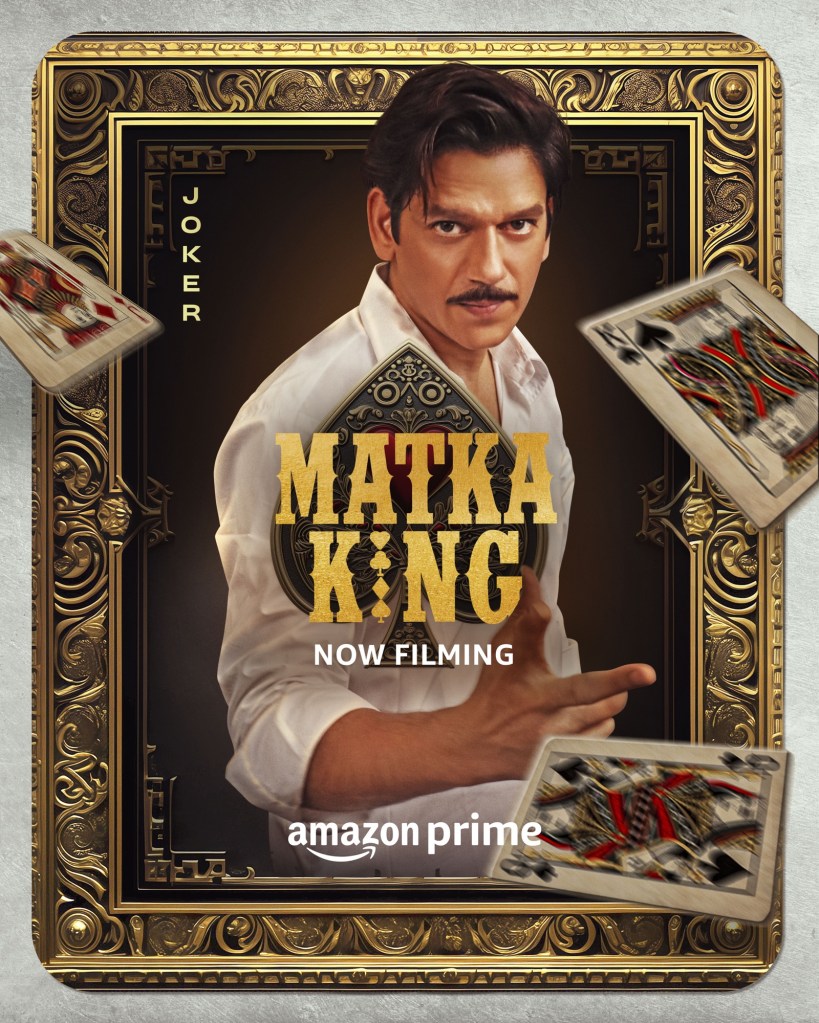
At the center of this whirlwind is Brij Bhatti played by Vijay Varma—an actor so effortlessly compelling that even when the plot stumbles, you’re still glued to him like a moth to a morally confused flame. He plays a man who seems to start off with principles, or at least the idea of them. There’s a lot of talk about honesty—so much, in fact, that you begin to think you’ve accidentally tuned into a TED Talk on ethics. But just when you’re nodding along, convinced of his moral compass, the show pulls the rug out from under you.

Suddenly, the man who positioned himself as the anti-corruption crusader of the Matka world starts looking suspiciously like… well, the very thing he claimed to oppose.

Now, is this intentional? Are we witnessing a nuanced exploration of moral ambiguity? Or did the writers just spin the wheel and go, “Let’s see where it lands”? Hard to say. The show seems undecided about whether it wants him to be a hero, a villain, or a philosophical riddle wrapped in a betting slip. But maybe—that is the point. Everyone’s operating on their own version of truth. Personal honesty. Subjective integrity. The kind that works wonderfully… until it doesn’t.

Alongside Varma, you’ve got Kritika Kamra, his business partner cum paramour and Sai Tamhankar, the wife adding their own layers to the narrative. Her arc? Familiar territory. The neglected spouse. The emotional collateral damage of ambition. You can practically see the storyline coming from a mile away: husband gets successful, husband gets distracted, husband finds someone “new and shiny,” husband realizes he’s made a mess of things. Rinse, repeat, regret.

It’s predictable, yes—but also relatable in a painfully human way.

Veteran scene-stealer Gulshan Grover steps in as Laljibhai, the old-guard power player who brings both gravitas and that signature “I’ve-seen-it-all” menace. He’s the kind of character who doesn’t need to raise his voice to control a room—he just exists in it, and everyone else adjusts accordingly.

Then there’s the ever-interesting dynamic with his brother, played by Bhupendra Jadhavat as Laxman. He starts off as the errant, slightly-in-the-shadow sibling, but as the stakes rise (and oh, they do), his arc quietly simmers in the background. He’s not loud, not flashy—but he represents something crucial: the emotional cost of ambition within a family. Also, let’s be honest, every crime saga needs that one brother who either saves the day… or complicates it spectacularly.

Also worth calling out is Jamie Lever as Sulbha, who brings a refreshing spark to the screen. There’s a certain grounded warmth and street-smart charm she carries, making Sulbha feel real even when the writing around her isn’t always fully developed. 
And then there’s Siddharth Jadhav as Daghdu who quietly steals a few moments of the show. He does a remarkably competent job of expressing simmering disappointment that eventually turns into decisive action—taking matters into his own hands, even when the odds (and consequences) are stacked against him. What’s striking is his quiet pride; even when caught, Daghdu doesn’t crumble or plead—he owns his choices with a stubborn, almost unsettling lack of regret.

What Matka King does well is capture the seductive nature of success. The slow drift from loyalty to self-interest. The quiet abandonment of friends who were once “brothers.” The classic “I’ll never change” turning into “I barely recognize myself.” It’s a tale as old as time, dressed up in numbers, bets, and high-stakes drama.

Now, coming to something the show gets right—but not consistently—the direction by Nagraj Manjule.

There’s clearly a competent hand at work here. The world-building is immersive, the mood is well-established, and the cinematography does a solid job of capturing both the grit and the glamour of the Matka universe. The frames feel intentional, the lighting leans into the tension, and there are moments where everything clicks beautifully—like a perfectly timed jackpot.

But then… there are those moments.

Moments where scenes feel stitched together rather than organically flowing. Transitions that make you go, “Wait, did I miss something?” Emotional beats that should land hard but instead just… hover awkwardly in the air like a bad bet. It’s not that the direction is weak—it’s that it occasionally loses clarity. You can sense what it’s trying to do, but it doesn’t always get there cleanly.

And yet, despite its clichés and occasional identity crisis, the show remains… oddly gripping.

Maybe it’s the pacing. Maybe it’s the tension. Or maybe it’s just Vijay Varma doing what he does best—making even a flawed character (and a slightly confused script) feel watchable, even magnetic.

Is it perfect? Not even close.

Is it entertaining? Absolutely.

Is it worth watching? For Varma alone—100%.

Because at the end of the day, Matka King may not always know what it wants to say, but it says it with enough style, intrigue, and dramatic flair to keep you hooked… even when you’re not entirely sure why.

Backstroke (2017), Short Film Movie Review

If you like your thrillers neat, explained, and wrapped up with a bow… Backstroke is not here for you. This one prefers to leave you floating in the deep end, wondering what just brushed past your leg.

At first glance, it’s deceptively simple: a bunch of teenagers steal a car (because nothing good in cinema has ever started with “we found this perfectly legal vehicle”), head into the woods, and proceed to make a series of increasingly bad decisions. There’s cutting, there’s a gun casually discovered like it’s a misplaced water bottle, and there’s that familiar sense that this is not going to end well. The film wastes no time telling you that morality has left the chat.

But here’s where it gets deliciously unsettling.

The story narrows its gaze to a girl who decides—because clearly things weren’t tense enough—to go skinny dipping in a dark, quiet lake. She waits for her boyfriend. He doesn’t show up. Already creepy. Then enters: a stranger. Calm, persistent, and the human embodiment of “something is very off here.” He asks questions that aren’t quite threatening on paper, but feel invasive in your bones. He insists she come out of the water. You, sitting safely on your couch, are internally screaming, “Absolutely not.”

And yet, she does.

From here, the film leans fully into psychological unease. The boyfriend is gone. The stranger claims he’s dead. No proof, no drama—just a statement dropped like a stone. The girl, now emotionally unraveling, ends up alone in the car, crying, driving… and that’s it. Roll credits. No explanation. No closure. Just vibes. Terrible, haunting vibes.

Now, what does it mean?

The internet, bless its collective overthinking heart, generally agrees on a few interpretations:

  • The stranger likely killed the boyfriend. His calm demeanor and insistence that she leave the water suggest control—he’s not panicked, he’s not guessing. He knows.
  • The earlier chaos with the teenagers (violence, the gun, the reckless energy) sets a tone: this world runs on impulsive, dangerous choices. The stranger may simply be the next, more sinister escalation of that same energy.
  • There’s also a darker, more metaphorical read: the lake scene represents vulnerability, and the stranger embodies predatory danger—someone who exerts psychological power rather than overt violence. The horror isn’t what we see; it’s what we don’t.

And that’s the genius of Backstroke. It withholds just enough to make your brain do cartwheels afterward. You’re not watching a story unfold—you’re piecing together a nightmare after waking up.

What makes it truly creepy isn’t jump scares or gore. It’s the tone. The stillness. The way normal conversation slowly turns into something suffocating. It’s the cinematic equivalent of realizing someone has been standing too close to you for too long.

Also, can we talk about how the film just… ends? No dramatic reveal, no heroic comeback. Just a girl, a car, and emotional devastation. It’s like the movie looked at traditional storytelling and said, “Nah, I’ll just haunt them instead.”

In short, Backstroke is that quiet, eerie whisper of a film that sneaks up on you, refuses to explain itself, and then lingers—like a bad feeling you can’t quite shake.You don’t watch it. You survive it.

Dhurandhar : Netflix Review

I watched Dhurandhar very, very late — the kind of late where the trailers have aged like milk and every second person on your timeline has already declared it the “best thriller ever” or “commercial cinema at its peak.” By the time I finally hit play, I was certain the movie would underdeliver. After all, how many films can actually live up to Pathaan-level hype and hold your attention without feeling like a glorified fireworks display?

Surprise (the good kind) — Dhurandhar did.

Yes, it’s inspired by real events, but that label feels like a humble accessory rather than a marketing tagline. The film doesn’t rest on “based on truth” the way some movies lean on troupes. Instead, it treats the real-world scaffold as a solid foundation and builds something cinematic, engaging, and — dare I say it — clever. What truly makes it work is not just the story but how that story sounds, feels and resonates with today’s audience. The background score and music elevate scenes in just the right way — powerful without drowning out the narrative.

Now to the meat: the performances — and there are many.

At the centre of it all is Ranveer Singh as Hamza Ali Mazari / Jasikirat Singh Rangi — an undercover agent whose transformation anchors the entire film. Ranveer doesn’t just play the lead; he carries the film on his shoulders, embodying his character’s fearlessness, vulnerability, humour, and quiet intensity like someone who genuinely lives in the role. 

Opposite him, Akshaye Khanna portrays Rehman Dakait, the feared leader of the Lyari gang — a gangster with swagger and menace that never feels cartoonish. Akshaye delivers his performance with an icy precision that turns every scene he’s in into a small masterclass in controlled menace. It’s one thing to be intimidating; it’s another to make it look so effortless. 

Then there’s Sanjay Dutt as S.P. Choudhary Aslam, the larger-than-life anti-extremist specialist whose presence injects the film with bursts of intense charisma. Dutt brings a gritty gravitas to the role, and his commanding physicality never lets you forget he’s not just part of the story — he owns his space in it. 

R. Madhavan as Ajay Sanyal, the strategic mind behind many of the covert operations, offers a calmer but no less compelling counterpoint. His performance is subtle and measured, giving the film emotional nuance at moments when it could easily have spiralled into only action. 

Arjun Rampal, playing Major Iqbal, adds another layer of complexity — often unsettling — with an edge that sometimes feels too real for comfort. He’s intense, unflinching, and delivers one of the film’s most haunting sequences. 

Among the supporting cast, Sara Arjun as Yalina Jamali has eye candy value and yes — the so-called “heroine” role you might feel was underutilised doesn’t fade entirely into the background, but compared to the weight carried by the ensemble around her, her arc feels a bit lighter.

Danish Pandor as Uzair Baloch and Rakesh Bedi as Jameel Jamali bring texture and grounding to the world, while Saumya Tandon as Ulfat adds moments of human warmth in an otherwise high-tension story. 

The villains and supporting players don’t play for cheap shock value or exaggerated theatrics. Each brings a grounded credibility, which means when heat rises, it actually feels like heat — not just CGI fireworks.

What ties all these performances together is the confident direction of Aditya Dhar and a script that balances tone with spectacle. With such a massive cast, it would’ve been very easy for one actor to overshadow the rest — yet the film rarely lets that happen. Each performance has room to breathe, and the chemistry among the actors feels natural and well-orchestrated. 
Cinematography is sharp, capturing gritty realism alongside sweeping, high-stakes drama. The background score complements rather than overpowers, giving emotional weight to scenes of tension, humour, and conflict alike. The direction doesn’t shy away from grim realities — instead, it presents them with purpose, contextualising every action and reaction without feeling didactic.

Certainly, Dhurandhar isn’t perfect. There are moments when its length can feel indulgent, and a few narrative detours might test your attention span. But if you stick with it, the emotional payoffs are worth it.

The film succeeds because it respects its audience — trusting you to piece together motives, consequences, and the moral weight of every decision. For once, the hype isn’t louder than the substance. And after sitting through three hours and thirty-odd minutes, I understand why audiences worldwide connected with it.

Was I surprised? Yes.

Did it deserve its success? Absolutely.

Am I looking forward to Dhurandhar Part 2? Without a doubt.

Pinterest Marketing:The Platform That Sells Without Yelling

Alright, pull up a chair. Or a beanbag. Or that impossibly aesthetic cane chair you pinned three months ago and still haven’t bought. Let’s talk about Pinterest—the most misunderstood, under-utilised, quietly powerful platform in the social media universe.

If Instagram is the party and LinkedIn is the conference room, Pinterest is the mood board of intent. And that’s exactly why you should be promoting on it—and running ads on it—yesterday.


Pinterest Is Not Social Media. It’s Visual Google Wearing Linen

First, let’s bust a myth. Pinterest isn’t really “social.” No doomscrolling. No trolls. No cousin’s wedding album. It’s a visual discovery engine where people arrive with purpose.

People don’t open Pinterest to kill time.
They open it to decide.

What to wear.
What to buy.
How to decorate.
Where to travel.
What kind of person they want to be by Tuesday.

And here’s the clincher: Pinterest users plan before they purchase. Which means if you show up early, you win.


Brands That Quietly Win Big on Pinterest

Some smart brands figured this out ages ago and have been living their best algorithmic life ever since:

  • IKEA – Selling entire lifestyles, not furniture. Their pins don’t scream “SALE.” They whisper, “This could be your life.”

  • Sephora – Tutorials, routines, and “looks” that land months before people buy.
  • Etsy – Basically built for Pinterest. Handmade, niche, scroll-stopping perfection.
  • Airbnb – Selling feelings, not beds. Sunlit balconies beat hotel room shots any day.
  • H&M – Outfit inspiration > outfit promotion.

Notice a pattern? They’re not shouting offers. They’re planting ideas.


Why You Should Be on Pinterest

1. People Are Already Looking for You (They Just Don’t Know Your Name)

Pinterest searches are non-branded. Users search for “minimal wedding décor” or “monsoon skincare routine”—not your brand name. That’s gold. You’re discovered before loyalty exists.

2. Pins Don’t Die. They Hibernate.

An Instagram post lives for 48 hours. A Pinterest pin? Six months to two years.
Pinterest content is the tortoise. Social media is the caffeine-addicted hare.

3. Ads Feel Like Content (Not Interruptions)

Pinterest ads blend in so well that users often save them instead of skipping them. Imagine paying for ads that people bookmark. Wild.

4. Pinterest Traffic Actually Converts

Pinterest users don’t window-shop. They build carts in their heads first. Which means when they click, they’re closer to buying than most platforms.


Pinterest Ads: Soft Sell, Hard Results

Pinterest ads work best when they don’t feel like ads. Promoted Pins, Shopping Pins, Video Pins—they all thrive when they’re:

  • Helpful
  • Aspirational
  • Visually calm (Pinterest hates chaos)
  • Designed for saving, not just clicking

Think less “BUY NOW”
More “Here’s how your life could look.”


Works Best for Which Brands?

Pinterest is not for everyone. But it’s perfect for:

  • Fashion & beauty
  • Home décor & interiors
  • Travel & tourism
  • Food, recipes & beverages
  • Wellness, fitness & Ayurveda
  • Weddings & events
  • D2C lifestyle brands
  • Education, planners & creators

If your product can be imagined, Pinterest wants you.

If your brand is impulse-only, trend-only, or meme-only—maybe sit this one out.


Points to Note Before You Dive In Headfirst

1. Design Matters More Than Copy

Pinterest is visual-first. Use vertical formats, clean typography, warm tones, and clear imagery. This is not the place for clutter or Comic Sans (ever).

2. SEO Is Your Secret Weapon

Pinterest runs on keywords. Your pin titles, descriptions, boards—all need search-friendly language. Think like Google. Dress like Vogue.

3. Think in Seasons, Not Campaigns

Pinterest users plan 30–90 days ahead. Summer collections should go live in spring. Wedding content should appear before the ring does.

4. Be Patient. Then Be Consistent.

Pinterest rewards consistency, not virality. This is a slow burn with long-term payoff. Like compound interest. Or a good skincare routine.


The Big Takeaways (Pin These Mentally)

  • Pinterest is where intent lives
  • Ads feel native, not annoying
  • Content lasts far longer than other platforms
  • Perfect for brands that sell aspiration, not urgency
  • SEO + aesthetics = magic
  • If Instagram is your shop window, Pinterest is your catalogue and your cashier

Final Thought

Pinterest doesn’t scream for attention. It waits patiently, impeccably dressed, knowing that when the time is right—you’ll come looking.

And when you do, it will already have your brand neatly pinned, saved, and chosen.

Quiet power. Long game. Serious results.

Now tell me—why aren’t you on Pinterest yet?

The Billionaire’s Social Calendar

There are people who plan holidays.

There are people who plan careers.

And then there are people who plan visibility.

The ultra-wealthy don’t ask “Where should I go this year?”

They ask, “Where will my absence be noticed?”

For billionaires, time isn’t measured in weeks or quarters — it’s measured in moments of convergence. Moments when power gathers, culture concentrates, and money quietly leans across the table and says, “So… what’s next?”

These moments don’t happen everywhere. They happen in very specific places, at very specific times — a snow-covered Swiss town in January, a grass court in London in July, a yacht-lined harbour in Monaco just before winter sharpens its teeth.

This isn’t a list of events. It’s a circulation map. A month-by-month guide to where billionaires reliably, repeatedly, and very deliberately show up — ostensibly for sport, art, fashion or ideas… but really to remain part of the conversation that decides what matters next.

Think of it less as a calendar and more as global attendance marking.

JANUARY – Davos & the Alpine Reset

🏔️ World Economic Forum

January is when billionaires put on sensible shoes and pretend they’re not enjoying the attention.

Davos is not a conference; it’s an annual alignment ritual. The world’s most powerful people gather in a Swiss ski town to discuss inequality while staying in chalets worth more than small nations.

Panels are public. Decisions are private.

Everyone says they’re “listening”.

Being seen at Davos means you’re not reacting to global shifts — you’re early to them.

❄️ St MORITZ & Gstaad Ski Season

Post-Davos, the social circuit slides smoothly into St. Moritz and Gstaad — where the serious conversations continue, but softer, over fireplaces.

St. Moritz is where billionaires go to be visibly rich.

Gstaad is where they go to be discreetly influential.

No hashtags. No noise. Just immaculate snow and inherited confidence.

FEBRUARY – Sport, Spectacle & Subtle Power

🏈 The Super Bowl

February belongs to America — and therefore, to the Super Bowl.

Yes, it’s a football game. But for billionaires, it’s a corporate pilgrimage. Private jets, box seats, brand deals, halftime conversations that matter more than the score.

Nobody here is watching the game alone.

They’re watching each other watching the game.

MARCH – The Calm Before the Couture

March is quieter — intentionally. This is when the ultra-wealthy recalibrate, acquire art privately, and pretend they’re not preparing for fashion season.

Think of it as the breath before the flashbulbs.

APRIL – Art, Taste & Soft Power

🎨 Global Art Fair Circuit (Netherlands)

Spring art fairs across Europe — particularly in the Netherlands — mark the start of the art-as-influence season.

These fairs aren’t about buying paintings. They’re about signalling taste. And taste, at this level, is currency.

Collectors don’t ask prices.

They ask provenance.

MAY – Cannes, Darling

🎬 Cannes Film Festival

May belongs to Cannes.

This is where billionaires trade boardrooms for yachts and pretend they’re just here “for the films.” Cannes long ago stopped being just a festival — it’s now a floating marketplace of culture, fashion and finance.

Films premiere. Deals close. Photographs last forever.

If Davos is where power speaks, Cannes is where it poses.

JUNE – Swiss Precision & Cultural Capital

🎨 Art Basel

Art Basel in Switzerland is where money meets meaning.

This is not loud art. This is serious art — the kind that gets museum wings named after donors. Billionaires attend Basel because it reassures them that wealth can also be thoughtful.

No selfies. Plenty of opinions.

JULY – Grass Courts & Old Money

🎾 Wimbledon Championships

Wimbledon is summer restraint perfected.

No logos. No theatrics. Just strawberries, champagne, and the quiet confidence of people who don’t need to explain themselves.

Billionaires love Wimbledon because it’s not flashy — it’s correct. You don’t arrive loudly here. You arrive properly.

The Royal Box is the real scoreboard.

AUGUST – Cars, Curves & California Sun

🚘 Monterey Car Show

 Golf at Pebble Beach

August in Monterey is where billionaires reveal their toys.

The Monterey Car Show and Pebble Beach Concours d’Elegance are less about automobiles and more about curated obsession. Vintage Ferraris. Rare Bentleys. Conversations that begin with, “You’ll appreciate this…”

Golf at Pebble Beach follows naturally — where deals are discussed gently, between swings.

Speed outside. Stillness inside.

SEPTEMBER – Fashion Takes Over

👠 New York Fashion Week

September begins with New York — energetic, ambitious, transactional.

Billionaires attend NYFW to back designers, spot trends, and remind everyone they’re not just investors — they’re tastemakers.

Front row is currency.

Backstage is power.

OCTOBER – Paris Decides What Matters

🗼 Paris Fashion Week

Paris is where fashion becomes philosophy.

Paris Fashion Week isn’t about clothes. It’s about direction. What you see here defines what the world will wear six months later.

Billionaires show up because culture flows from Paris — and they like to be upstream.

NOVEMBER – Yachts & Mediterranean Wealth

 Monaco Yacht Show

Monaco in November is unapologetic wealth.

The Monaco Yacht Show is where billionaires compare floating homes and casually discuss sustainability while standing on decks longer than football fields.

Nothing whispers power like a yacht that doesn’t need explaining.

DECEMBER – Speed, Lights & Celebration

🏎️ Abu Dhabi Grand Prix

December ends the year the way billionaires like it: fast and fabulous.

The Abu Dhabi Grand Prix is Formula One’s finale — a dusk-to-night spectacle where engines scream and champagne doesn’t wait for the podium.

It’s celebration disguised as sport.

Networking disguised as leisure.

If you’re here, you’ve had a year worth celebrating — or at least, worth being seen celebrating.

Final Words…

Billionaires don’t chase trends.

They orbit moments.

From Davos to Wimbledon, from ski towns to fashion capitals, this calendar isn’t about indulgence — it’s about presence. Being in the right place, at the right time, with the right people noticing.

You don’t attend all of these.

You graduate into them.

And once you do — the calendar stops being about dates.

It becomes about expectations.

Vash Level 2 : Netflix Review

Vash Level 2 doesn’t scream for attention. It creeps into it. And that, honestly, is its biggest strength.

Firmly positioned as a horror-thriller, the film operates in the uncomfortable space between fear and fascination. This is not horror that relies on cheap shocks or excessive gore. Instead, it leans into psychological dread, control, and moral unease—making it far more disturbing than loud.

If comparisons are inevitable, the closest reference point would be Shaitan. Both films explore possession—not merely of the body, but of agency, choice, and free will. Where Shaitan focused on a single individual under demonic influence, Vash Level 2 escalates the idea chillingly: here, an entire group of schoolgirls becomes the vessel.

The film opens inside a school, and right from the first few scenes, the setting feels alarmingly real. This isn’t a stylised, glossy horror backdrop—it’s grounded, lived-in, and recognisable. The corridors, classrooms, and everyday routines make the unfolding horror feel invasive, as if it could happen anywhere. That realism amplifies the fear far more than spectacle ever could.

The performances—especially by the young girls—are strikingly natural. There’s no overacting, no melodrama. Their terror feels internalised, confused, and helpless, which makes it far more unsettling. The horror inflicted on them isn’t performative; it’s quiet, persistent, and deeply uncomfortable to watch. The adults—the headmistress, the police, and authority figures—are equally convincing, portrayed not as saviours but as people scrambling for control in a situation that refuses to obey logic.

Technically, the film is solid across the board. The cinematography is confident and restrained, using framing and lighting to suggest dread rather than announce it. The production design deserves special mention—the school becomes a character in itself, its familiarity slowly turning oppressive. For a Gujarati film, the production values are impressively high, and it shows in every frame.

The narrative takes a compelling turn with the entry of the male protagonist—a man carrying his own haunted past. His daughter has been trapped under a demonic spell for twelve years, and in a grim twist of fate, he has imprisoned one such entity in his basement. This revelation shifts the film from a straightforward possession story into something morally layered and emotionally charged.

The demonic force tormenting the schoolgirls isn’t random. It is searching—for its brother. And the girls become tools in that search. What elevates the film is the protagonist’s conflicted motivation: he is not driven purely by heroism, but by desperation. His goal is singular—to free his daughter, whatever the cost.

This collision of motives—grief, guilt, vengeance, and supernatural manipulation—forms the film’s core. When the protagonist ultimately leads the younger demon to its imprisoned elder brother, the film enters its most gripping phase. What follows is tense, unsettling, and refreshingly free of easy answers. The film refuses to spoon-feed morality, trusting the audience to sit with its discomfort.

In terms of pacing, Vash Level 2 gets it right. It doesn’t drag, it doesn’t rush. It knows exactly how long to linger and when to move on. The runtime feels deliberate—tight enough to hold attention, restrained enough to avoid indulgence.

Yes, Shaitan may still edge ahead in terms of sheer impact. But Vash Level 2 doesn’t try to outdo it—it chooses instead to underplay its hand. And that restraint works in its favour.

Watch it in Gujarati, with subtitles. The language, performances, and cultural texture matter. This is horror that doesn’t shout—it whispers, lingers, and follows you home.

Understated. Well-crafted. Unsettling.

Vash Level 2 proves that regional cinema can do horror with intelligence—and that’s what makes it worth watching.

The Signet Ring Is Back. And It’s Basically Personal Branding for Your Hand.

Let’s address the ring finger in the room.

The signet ring—yes, that ring, the one that once screamed aristocracy, entitlement, and “my family owned land before your country was invented”—is back. Except now, it’s been rebranded. Cleaned up. Democratised. And crucially, stripped of inherited power and filled with earned identity.

Which is exactly why it’s everywhere.

From Victoria Beckham, who hasn’t worn a logo louder than a whisper in decades, to Meghan Markle, who understands symbolism better than most nation-states—signet rings have quietly become the accessory of choice for people who know who they are.

And that’s not fashion.

That’s branding.

First, What a Signet Ring Really Is

Historically, signet rings were functional. They sealed letters, validated documents, and said: this message matters because I matter.

They were the original brand stamp.

The wax seal was the logo.

The ring was the trademark.

You didn’t wear one to look good. You wore one because your word carried weight.

Fast forward to now, and the function is gone—but the meaning has aged beautifully. Like any good brand asset.

Why Signet Rings Are Having a Comeback (And Why That Matters)

Because we’re done with loud branding.

Big logos feel insecure now. They’re trying too hard. They’re the visual equivalent of shouting your LinkedIn bio at a dinner party.

Signet rings, on the other hand, are quiet authority.

They don’t ask for attention.

They assume it.

And in an era obsessed with “personal brand,” that’s the holy grail:

recognition without explanation.

What a Signet Ring Actually Says About You

Let’s be honest—everything you wear is communication. You’re either curating a message or accidentally sending one.

A signet ring says:

I value intention over impulse I think long-term I don’t need trends to validate me

It’s not jewellery as decoration.

It’s jewellery as declaration.

Blank face? Minimalist. Confident. Controlled.

Initials? Personal, not performative.

A symbol only you understand? That’s elite-level branding.

Because the strongest brands don’t explain themselves. They invite curiosity.

Why Fashion’s Smartest People Wear Them

Victoria Beckham doesn’t wear a signet ring because it’s “in.” She wears it because it aligns with her entire brand philosophy: edit ruthlessly, reduce noise, mean everything.

Her style is a masterclass in restraint. And restraint, ironically, is expensive.

Meghan Markle’s signet rings operate differently but just as intelligently. They’re symbolic without being sentimental. Personal without being precious. They say: I belong, but I also choose.

That’s not accidental. That’s narrative control.

The Signet Ring Is Genderless (Like Good Brands)

Here’s the thing: signet rings don’t perform gender. They perform presence.

They work on anyone because they’re not about sparkle. Or excess. Or validation.

Which is why they’ve slipped seamlessly into modern wardrobes. Creatives, founders, strategists, designers—the people who build brands for a living tend to wear them.

Coincidence? Please.

Why the Signet Ring Is a Personal Branding Power Move

Branding isn’t about being seen everywhere.

It’s about being remembered somewhere specific.

It shows up in :

-Handshakes

– Coffee meetings

– Gestures

– Conversations

Hands are expressive. Rings are anchors. And consistency? That’s brand equity.

Over time, the ring stops being an accessory. It becomes part of the identity.

And the best part? No algorithm decides its reach.

Final Thought: Loud Brands Chase Attention. Quiet Ones Own It.

The return of the signet ring isn’t nostalgia. It’s a correction.

We’re moving away from borrowed status and towards authored identity. From showing off to showing up. From decoration to meaning.

A signet ring doesn’t make you powerful.

It signals that you understand power doesn’t need a press release.

And honestly, if your personal brand were a logo—

this would be the one you’d trademark.

To Wear or Not to Wear: Luxury Brand Logos

Let’s begin with a universal truth:

Nobody needs a logo.

People want logos.

Because logos are not fashion.

They’re social subtitles.

When you wear Gucci, Prada, Fendi or Chanel you’re not dressing for warmth.

You’re dressing for interpretation.

You’re basically saying:

“Please notice me. But in a tasteful, expensive way.”

WHY PEOPLE WEAR BIG LOGOS

People who wear obvious logos usually fall into three categories:

1. The Announcement Phase

These are people who’ve recently arrived—financially, socially, emotionally.

New job. New money. New city. New confidence.

The logo is proof of progress.

It’s not arrogance.

It’s documentation.

2. The Borrowed Credibility Club

A logo is the fastest way to rent status without a long backstory.

You don’t need to explain your taste if the shirt already did it for you.

This is fashion’s equivalent of:

“As per my last email…”

3. The Streetwear + Culture Crowd

Here, logos aren’t about wealth. They’re about belonging.

If you know, you know.

If you don’t, you Google later.

Different game. Same signal.

WHO AVOIDS LOGOS LIKE A BAD INVESTMENT?

Now let’s talk about the people who don’t wear logos.

These people exist.

They are calm.

They are dangerous.

1. Quiet Money

These people could buy the brand. They just don’t feel the need to.

Their clothes say:

“This fits well. That’s enough.”

If there is a logo, it’s:

Inside the jacket On the button Or visible only to someone who already owns the same thing

Flex level: lethal.

2. Minimalists with Opinions

They believe logos are visual clutter.

They think branding is loud.

They think confidence is silent.

They are not wrong.

3. People Who Are the Brand

Founders. Creators. Leaders.

They don’t outsource credibility.

Why promote someone else when your name already carries weight?

NOW, THE REAL HEAVYWEIGHTS: EXCLUSIVE PRIVATE CLUB LOGOS

Luxury brand logos say:

“I spent money.”

Private club logos say:

“I was allowed.”

Very different energy.

Here are some real examples:

Soho House

That tiny house icon? It doesn’t shout. It nods. It says “creative industry, global access, decent cocktails.”

Annabel’s

Old money. Old rules. Old-world confidence. If you know this logo, you don’t ask questions.

The Art’s Club

Subtle. Cultured. Slightly intimidating. The logo isn’t fashion—it’s punctuation.

These logos don’t exist for validation.

They exist for recognition within a very specific room.

WHAT’S ACTUALLY TRENDING IN LOGOS RIGHT NOW?

Here’s the plot twist:

Loud Logos Are Out.

Recognisable Taste Is In.

Current trends:

Tone-on-tone logos

Logos only visible up close

Vintage logos (because new money screams, old logos whisper)

Clothes that rely on cut, not clout

People are tired of being unpaid billboards.

Luxury is quietly moving from:

“Look what I bought”

to

“Look how well this fits.”

DO LOGOS INCREASE YOUR PERSONAL BRAND VALUE?

Honest answer?

Only if you don’t need them.

Logos help when:

You’re entering new rooms

You need fast signalling

You’re still building perception

Logos hurt when:

They replace personality

They arrive before you do

People remember the brand, not your name

The strongest personal brands use logos like seasoning.

Never like the main dish.

KEY TAKEAWAYS

Logos don’t make you interesting—context does.

The louder the logo, the earlier the journey. Quiet luxury is not about money. It’s about certainty.

Private club logos carry more weight because they’re about access, not purchase.

The ultimate flex? When people recognise you, not your clothes.

Wear logos if they serve your story.

Lose them when you become the headline.

Because at the highest level of style and status, nothing is louder than being unmistakably yourself.

How to Win Valentine’s Day by Being Anti-Valentine’s

Once upon a time, Valentine’s Day had a simple brief:

Boy meets girl. Girl expects flowers. Boy panics. Credit card suffers.

That era is over.

Today’s Valentine’s Day audience is older, smarter, more emotionally articulate—and frankly, tired. Tired of being told romance must look like a rom-com scene with fairy lights and forced intimacy. Tired of pretending a relationship status defines self-worth. Tired of celebrating a day that feels like an annual performance review of their love life.

Which is why the smartest brands aren’t trying to out-romance Valentine’s Day anymore.

They’re breaking up with it. Publicly. Cheerfully. With memes.

Welcome to the rise of Anti-Valentine’s Day content—where single isn’t sad, divorce isn’t failure, self-love isn’t cringe, and Valentine’s Day finally belongs to everyone.

The Cultural Shift Brands Can’t Ignore

Let’s state the obvious):

More people are single. More people are divorced. More people are choosing not to couple up. And a growing number are choosing peace over performance.

Love hasn’t disappeared.

The pressure around it has.

Valentine’s Day used to celebrate romance. Now it exposes expectations. And consumers—especially millennials and Gen Z—are allergic to forced sentimentality. They don’t want brands telling them how love should look. They want brands that understand how life actually looks.

Sometimes love is a partner.

Sometimes it’s friends.

Sometimes it’s a pet.

Sometimes it’s ordering food for one and not sharing.

Anti-Valentine’s content works because it doesn’t reject love—it rejects the formula.

Why Anti-Valentine’s Content Performs

Traditional Valentine’s content asks, “Who are you buying this for?”

Anti-Valentine’s content asks, “Why are we pretending this day is only for couples?”

That shift alone makes people feel seen.

The best campaigns last year didn’t sell romance. They sold relief. Relief from expectations. Relief from comparisons. Relief from pink overload and poetic nonsense.

They said things like:

“You don’t need a date to celebrate.” “Buy this for yourself.” “It’s okay to opt out.” “Love is optional. Cake is not.”

And consumers rewarded them with engagement, shares, and something brands care deeply about but rarely admit—affection.

What Brands Did Right Last Year

Some brands leaned into chaos. Some leaned into humour. Some leaned into honesty. And almost all leaned away from couples-only storytelling.

The strongest executions followed three simple principles:

1. They told the truth

They acknowledged that Valentine’s Day can feel awkward, exclusionary, or exhausting. That honesty made the content instantly relatable.

2. They used humour, not hostility

Anti-Valentine’s doesn’t mean anti-love. It means anti-pressure. The tone stayed playful, not bitter. Witty, not resentful.

3. They reframed the occasion

Valentine’s Day became about self-care, friendships, indulgence, or doing absolutely nothing—and enjoying it.

Chocolate brands mocked the day while still selling chocolate.

Food brands celebrated “dinner for one” without apology.

Wellness brands positioned self-love as the real luxury.

And some brands went full savage—politely reminding us that flowers die but discounts don’t.

Cadbury 5Star’s loud-and-proud “erase/destroy Valentine’s Day” attitude (yeah, they basically told the holiday to sit down), which got people laughing, sharing and, crucially, buying chocolate that wasn’t trying to out-emote anyone. That kind of bold anti-V energy performed like a social boomerang — attention stuck and sales followed.

Okay, you want to create anti-Valentine’s content this year

Here’s a tactical playbook that’s part strategy, part mischief, and very shareable:

Start with a truth bomb

Lead with data or a wink: “5 million people chose solo holidays last year” or “If you’re single, congrats — you’ve been emotionally efficient.” Short, punchy, and shareworthy. If you can make people nod and laugh, you’ve won the first swipe.

Make self-gifting noble

Launch limited-edition bundles pitched as “The Finally-For-Me Kit”: face mask, bath soak, a playlist, and a voucher. Promote with UGC — ask customers to post their ‘self date’ photos. The more ridiculous and earnest, the better.

Create an Anti-Hallmark Meme Machine

Use snappy copy: “Roses are red, receipts are forever,” or “Love is great. So is Netflix alone.” Memes travel. Make templates, GIFs, and stickers people want to send.

Host a ‘Break Up with Valentine’s’ Event IRL or virtual:

A no-couples karaoke, a stand-up night about dating disasters, or a “single speed dating for dogs” (yes, it’s a thing). Experiences build loyalty — and content.

Use Influencers Who Don’t Do Romance

Partner with creators known for sarcasm, self-care or irreverence. Ask them to share authentic single-day rituals — not staged candlelight shots. Authenticity beats gloss every time. 

Flip your emails

Swap flowery subject lines for blunt hooks: “Skip the date — get free delivery,” or “Refund your ex: 50% off.” Open rates spike when you surprise people with honesty.

Tie the message to purpose

Consider donating a portion of proceeds to mental health or community orgs with copy like: “Celebrate yourself, help someone else.” Purpose + humour = viral empathy.

Valentine’s Day Isn’t Over. It’s Evolved.

Valentine’s Day is no longer a couples-only dinner party.

It’s a potluck.

Everyone’s invited. Some bring partners. Some bring friends. Some bring themselves. Some bring snacks and leave early.

The brands that will win this year won’t shout “love” the loudest.

They’ll whisper, “You’re enough.”

And in a world exhausted by perfection, that’s the most attractive thing you can say.

Now go on.

Break up with Valentine’s Day.

Just do it kindly.