Now streaming on Amazon Prime
Kantara: Chapter 1 is set centuries before the events of the first film — a mythological prequel that dives into the origins of the Panjurli Daiva and the lineage bound to protect the land.
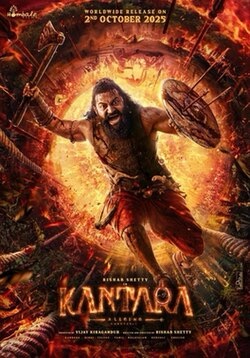
We follow Bhairava, an intense warrior bound by destiny, lineage, land, and divine forces.
The region is caught between a tyrannical feudal kingdom, spiritual prophecies, and brewing tribal unrest.
There’s a sacred conflict over who owns the forest, what the land demands, and how divine rage manifests when humans forget their place in the cosmic order. As Bhairava gets tangled in palace politics, forbidden romances, brutal battles, and spiritual calls he doesn’t fully understand, the film tries to trace how the legend of the Daiva began and why the divine-human connection in Kantara is so spiritually charged in the later timeline.
So yes — it sounds epic.
And in chunks, it is.
But… now let’s get to the actual review.
The Story Begins… and I leaned forward thinking: “Here we go!”
We open in a time long before scooters, smartphones, or even common sense. Kingdoms rise, forests whisper, and divine forces play tug-of-war with mortals. There’s a brewing prophecy, a sacred lineage, and enough atmospheric smoke to make you wonder if the set caught fire.
And honestly?
It starts off beautifully.
You think: “Yes yes YES — this is the Kantara I signed up for!”
But somewhere between the dramatic prophecies and the slow-motion swagger entries, you start noticing something… odd.
Rishab Shetty the actor? Missing. Rishab Shetty the STAR? Oh, very present.
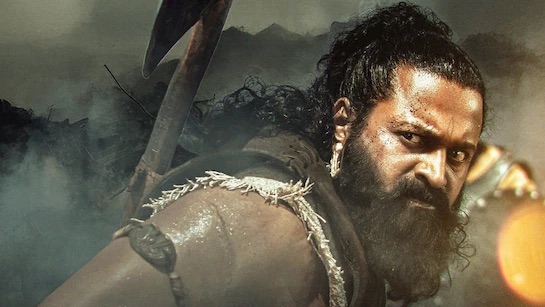
It’s as if Rishab said to himself:
“Last time people praised my performance. This time… they MUST also praise my aura.”
And suddenly, you’re watching a man who was once an astonishing storyteller now trying very hard to be a Marvel superhero from the Hoysala Cinematic Universe.
He isn’t acting anymore — he’s posing.
He isn’t performing — he’s projecting.
He isn’t entering scenes — he’s making grand entries designed to be paused and screen-shotted.
It’s not bad… but it’s not Kantara either.
The earthy rawness of the first film has been replaced by an “I must look impossibly cool at all times” aura.
Then the histrionics begin… and my popcorn almost filed a complaint.
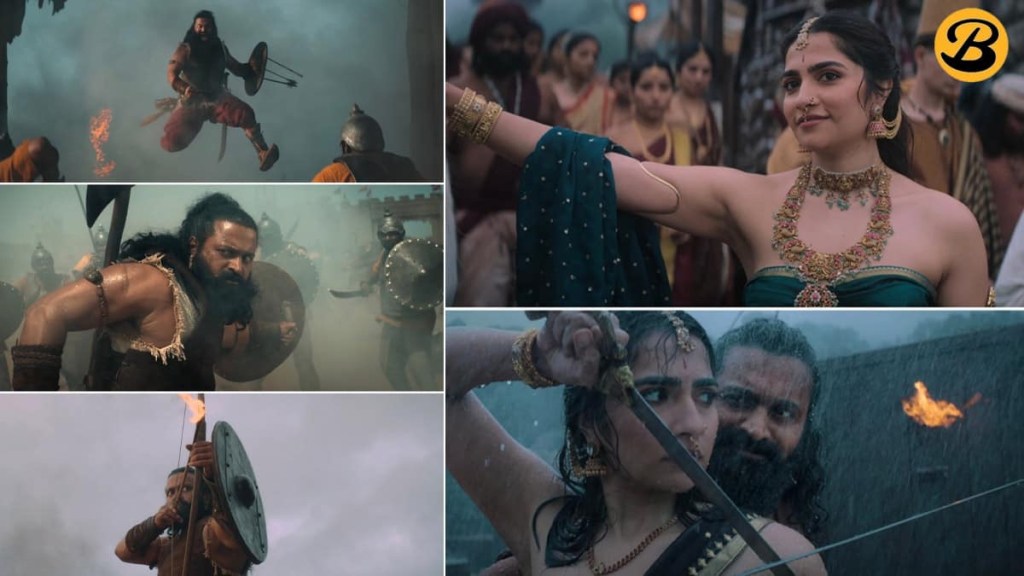
Now, I’m all for creative freedom.
But when a fight scene makes even a 6-year-old say, “Um… physics?” you know we’ve taken a detour.
There are leaps.
There are flips.
There are punches that send men flying like stray kites in Ladakh.
There are 3D effects that scream, “Look at me! LOOK AT ME!”
By the third such sequence, my eyes were rolling so much they completed 108 circumambulations of the living room.
At one point, I genuinely wanted to say to the screen,
“Please sir, can we get back to the actual story?”
And the humour… well…
Some jokes land like snowflakes.
Most land like coconuts.
They don’t hurt — but you do wonder why they exist.
It’s childish, oddly placed, and miles away from the subtle, authentic village humour that sparkled in Part 1.
But hang on — the second half arrives.
And suddenly…
Something shifts.
The plot grows a spine.
The world feels more connected.
There are flashes — beautiful flashes — of the magic that made the original such a cultural earthquake.
You go, “Ah! There it is. Why didn’t you do this from the beginning?”
But sadly, those moments are just that — moments.
Scattered, brilliant embers that can’t recreate the roaring spiritual fire we witnessed the first time.
Final thoughts: A visual masterpiece… missing its soul.
Kantara: Chapter 1 is stunning to look at.
No doubt.
The cinematography, the colours, the landscapes, the frames — each one is a painting.
But somewhere in the quest to build a mythological epic, the storytelling wandered off into the forest and didn’t return on time.
Rishab Shetty, the phenomenal actor-writer-director we admired, feels overshadowed by Rishab Shetty, the heroic legend who must look larger than the Himalayas.
The result?
A film that begins with promise, dazzles with spectacle, but forgets to carry the soul of the original.
Would I recommend it?
Yes — but with the same advice I give friends going on a tough trek:
“Go for the view, not the journey.”
 Honest Reviews