I’ll be honest right up front: I walked into Wake Up Dead Man: A Knives Out Mystery with expectations so low they were practically in the church basement. I’d watched the previous Knives Out films and, while they were clever enough, they never quite knocked my socks off. So this one, now streaming on Netflix, was approached with a healthy dose of scepticism and a mildly raised eyebrow.
And then… it surprised me.
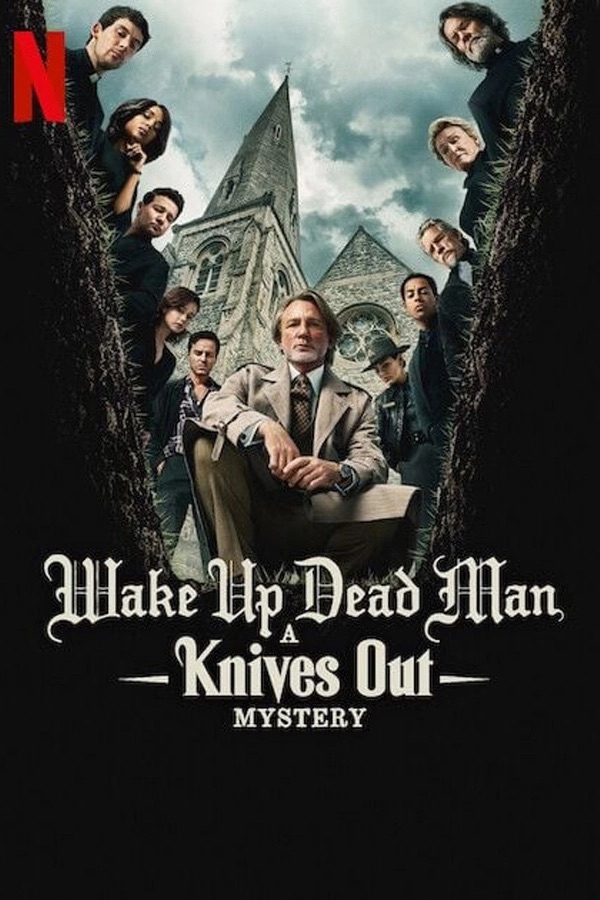
The film opens by following a young priest with a past — and not the metaphorical kind. He was once a boxer, and every now and then his fists still remember that fact before his conscience does. After one such lapse, he’s handed what feels like a gentler punishment: reassignment to another parish. Except this parish is governed — and I do not use this word lightly — by Monsignor Wicks.

Monsignor Wicks is not your warm, tea-and-biscuits-after-Mass sort of priest. He is vindictive, deeply judgemental, and appears to run the parish like a private fiefdom. From the pulpit, he breathes fire and moral superiority in equal measure. Around him is a tight-knit group of favoured parishioners, each with their own little vices, secrets, or weaknesses — all of which Wicks seems to catalogue and deploy as leverage when convenient. The faithful inner circle thrives; everyone else is subtly (and sometimes not-so-subtly) pushed out. Parish numbers dwindle, but Wicks remains firmly in control.
Caught in the middle of this moral minefield is our young priest, struggling with empty pews, regular confrontations with Monsignor Wicks, and the ever-watchful presence of Martha — the devoted parish worker who knows everything, runs everything, and frankly keeps the entire place from collapsing. (Don’t we all have a Martha in our lives?)

Then, inevitably, Monsignor Wicks is murdered.
And, equally inevitably, suspicion falls squarely on the hapless young priest — the outsider, the hothead, the one with a past that’s easy to weaponise.
This is where the film properly shifts gears. Enter Benoit Blanc, played once again by Daniel Craig, who wanders into this religious hornet’s nest armed with his drawl, his odd metaphors, and that uncanny ability to see straight through people while appearing mildly amused by them. The church setting proves to be a surprisingly rich playground for a Knives Out mystery — full of suppressed guilt, quiet vendettas, public virtue and private rot.

As the investigation unfolds, long-buried truths about Monsignor Wicks surface, alliances fracture, and every saintly face begins to look a little less holy. The film handles its twists with restraint rather than gimmickry, and for once, the social commentary feels earned rather than performative. Power, hypocrisy, moral authority, and the danger of unquestioned influence are all explored without the script shouting at you from the pulpit.
What really elevates Wake Up Dead Man is the strength of its performances, starting with Josh O’Connor as the young priest at the centre of the storm. O’Connor plays him with a simmering mix of restraint and volatility — you can feel the boxer still alive under the cassock, fists clenched just beneath the surface.
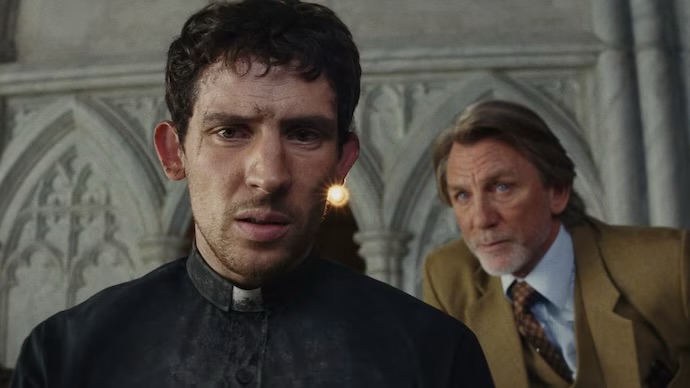
He brings real vulnerability to a character who could easily have become a stock “troubled outsider”, grounding the film emotionally while still making you wonder if he’s capable of crossing the line everyone suspects he has.
Glenn Close, as Martha, is quietly superb. She plays the parish lynchpin with the kind of lived-in authority that only she can pull off — efficient, loyal, slightly intimidating, and impossible to ignore.
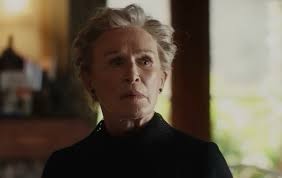
She’s the sort of character who smiles while knowing everything, and Close layers her performance with small looks and pauses that suggest far more than the script ever spells out. Yes, we’ve all known a Martha — and Close makes sure you’ll never underestimate one again.
As Monsignor Wicks, Andrew Scott is chillingly effective. He resists the temptation to play the role as a caricatured villain, instead delivering something far more unsettling: a man utterly convinced of his own righteousness. His sermons drip with judgement, his private conversations with manipulation, and his presence looms over the film even after his death. Scott’s Wicks is the kind of antagonist who doesn’t need to raise his voice to dominate a room — which makes his eventual unravelling all the more satisfying.
And then there’s Daniel Craig, clearly having a fine time as Benoit Blanc. Craig leans fully into Blanc’s peculiar charm — the drawl, the oddball metaphors, the deceptively relaxed demeanour — while subtly dialing down the showboating. Here, Blanc feels less like a gimmick and more like a necessary counterbalance to the film’s darker, more serious tone. He observes, listens, nudges, and then — as ever — quietly dismantles everyone’s version of the truth.
That said, it would be dishonest not to admit that a fair few elements in this Knives Out mystery are still decidedly bizarre and occasionally over the top. Some character beats and plot turns flirt dangerously with excess, threatening to tip the film into self-parody. What saves it from going completely down the tubes is its good humour, the consistently strong performances, and above all, the inherent likeability of its central characters — particularly O’Connor’s conflicted young priest, who keeps you emotionally invested even when the plot threatens to spiral.
It’s also undeniably fun to see so many familiar faces pop up along the way. Mila Kunis, however, feels underused.
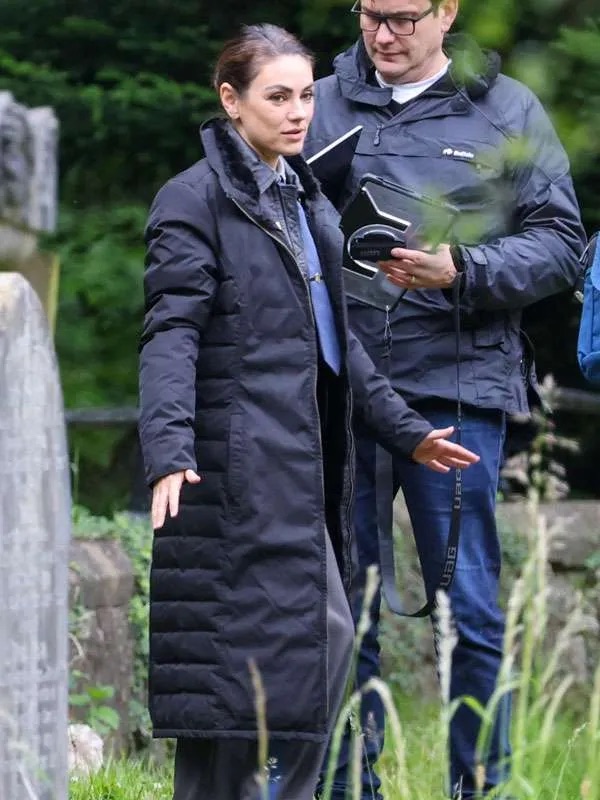
While it’s pleasant enough to see her on screen, her role doesn’t add much to the overall premise and ultimately feels more ornamental than essential — more eye candy than narrative catalyst in a film that otherwise works best when it’s digging into moral complexity rather than surface gloss.
Is Wake Up Dead Man perfect? No. It still carries some of the self-aware quirks and tonal flourishes that may divide audiences. But it is tighter, darker, and far more confident than its predecessors. Strong performances across the board anchor the mystery, elevate the writing, and give this instalment a gravitas the earlier films sometimes flirted with but never fully achieved.
I came in expecting to switch it off halfway.
Instead, I stayed till the final confession — and walked away thinking this might just be the Knives Out film that finally earns its mystery stripes.
 Honest Reviews