Streaming on Amazon Prime
Having watched the previous three seasons, it was only natural to tune into Season 4 of Four More Shots Please!—the final chapter of this glossy, friendship-driven series. Once again, the show revolves around four women navigating love, careers, heartbreaks, and personal growth in urban Mumbai.

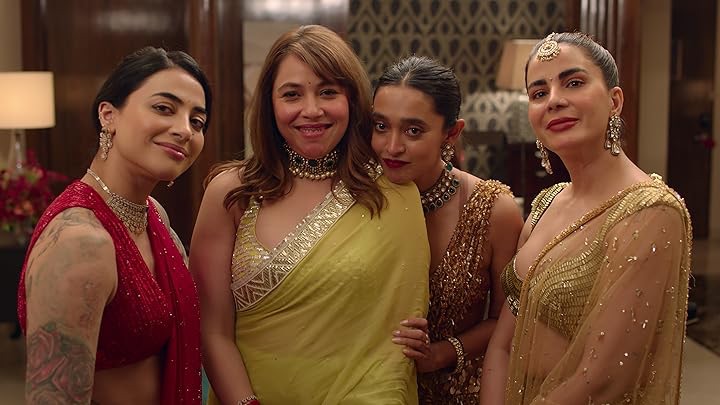
The core quartet remains unchanged. You have Kirti Kulhari as Anjana “Ansh” Menon, Sayani Gupta as Damini Rizvi Roy, Maanvi Gagroo as Siddhi Patel, and Bani J as Umang “Bani” Singh. The season opens with Siddhi getting married, which immediately sets the tone for how adulthood, relationships, and expectations are explored—sometimes thoughtfully, sometimes a little too conveniently.
At its heart, the show is about the coming together of four strong women. And yes, the Sex and the City influence is unmistakable. However, while the intention is clear, the desi version doesn’t quite hit the mark in the same way. The world of Four More Shots Please! remains heavily glamorised—designer outfits, high-end bars, beautiful apartments, and an almost effortless lifestyle. While you do identify with the emotional beats, the overall experience isn’t entirely relatable. These are women who can afford a certain kind of freedom—financially and socially—and that distance is always felt.
One recurring issue this season is the constant romantic entanglements. Almost everyone ends up in some form of a romantic triangle, and it starts to feel repetitive rather than layered.
Ansh & the Convenient Charm of Dino Morea
Ansh’s journey this season revolves around healing, self-acceptance, and opening herself up again. Enter Dino Morea, who rather suavely finds his way into Four More Shots Please. He’s older, boho, emotionally evolved, and—let’s be honest—you know from the moment he appears that they’re going to end up together. The predictability doesn’t ruin it, though. Their chemistry is undeniably hot, passionate, and visually compelling.

While his entry feels convenient, it’s also a necessary addition to the plot. He brings calm, maturity, and a certain grounded masculinity that balances Ansh’s emotional turbulence. His presence genuinely makes things more interesting, and Kirti Kulhari once again brings depth and restraint to Ansh’s arc—even if the writing doesn’t always challenge her enough.
Damini: Still the Most Engaging
Damini Rizvi Roy continues to be one of the more watchable characters. Her dynamic with Prateek Babbar is one of the stronger aspects of this season. There’s tension, attraction, and emotional push-and-pull that feels organic. Their track doesn’t feel rushed or ornamental, and that alone makes it stand out.

One of the most unexpectedly compelling additions in Season 4 is Damini’s brother, Ashokaditya “Ash” Rizvi Roy, played by Kunaal Roy Kapur. His entry instantly lifts the narrative and brings a much-needed emotional and tonal balance to the season. Ash’s equation with Damini is layered, messy, and deeply human, but it’s his constant tension with Siddhi that makes several scenes crackle with energy. Their interactions add friction, humour, and discomfort in equal measure, making otherwise ordinary moments genuinely engaging.
His intervention in Damini’s podcast—and the chaos that follows—is one of the most watchable stretches of the season. What works beautifully is how well-written the character is: Ash is sensitive yet irritating, emotionally vulnerable yet sharp, funny without being reduced to comic relief. In fact, he emerges as arguably the most well-rounded character in the entire series. His presence alone makes Season 4 far more watchable than it otherwise might have been.
Siddhi: Marriage, Mundanity & Missed Comedy
Siddhi’s marriage starts with promise but quickly slides into predictability. Instead of exploring intimacy, compromise, or emotional conflict in any layered way, we get conversations about cleaning, sweeping, Amazon deliveries, and domestic logistics. Realism is fine—but this feels lazy rather than insightful.
Her stand-up comedy career, too, is a missed opportunity. The idea of “anecdotal comedy” is repeatedly referenced, but the jokes rarely land. The punchlines feel flat, underwritten, and safe. Maanvi Gagroo remains a capable performer, but the material simply doesn’t give her enough to work with.
Bani: The Biggest Miss of the Season
Ironically, the boldest character ends up with the least satisfying arc. Bani’s storyline is not unconvincing because she’s bisexual—but because the LGBTQ narrative itself feels poorly handled. The intent to be inclusive is visible, but the execution lacks sensitivity and depth.
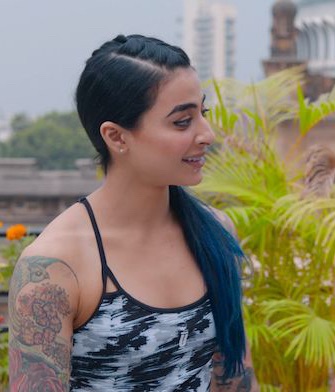
Her relationships feel caricatured rather than nuanced:
– A partner obsessed with punctuality
– A breakup song that feels more performative than earned
Then there’s Samira—her “one true love”—getting married, a storyline that feels melodramatic and over-the-top. Finally, Bani getting together with the franchise specialist feels forced and narratively convenient rather than emotionally authentic.
This was a real missed opportunity. Bani could have been a layered, sensitive, and powerful representation of the LGBTQ community. Instead, her arc feels laboured, rushed, and oddly superficial—especially disappointing for a final season.
Final Verdict
Four More Shots Please! Season 4 stays true to its glossy, aspirational identity. It’s stylish, bingeable, and emotionally accessible—but rarely brave. As a finale, it doesn’t quite deliver closure or transformation. It feels more like an extension than an ending.
You watch it because you’ve invested in these women, not because the storytelling suddenly evolves. There are sparks—especially Ansh’s arc and Damini’s storyline—but also clear blind spots, particularly in Bani’s journey.
A fitting goodbye, perhaps—but one that could have been far more meaningful.
 Honest Reviews