I was drawn to Haq for reasons that went beyond curiosity. When voices like Alia Bhatt praise a performance, you pause. When that performance belongs to Yami Gautam, you lean in. She appears far too sparingly on screen, but whenever she does, there’s an unmistakable sense that you’re watching a rare, deeply intuitive actor at work.
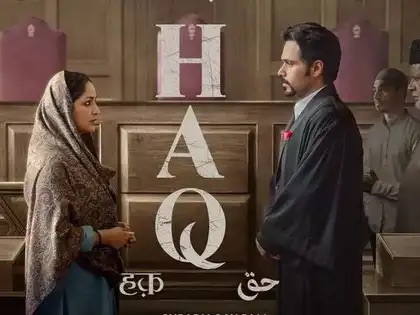
Based on a true story, Haq stars Yami Gautam and Emraan Hashmi as a married couple whose lives unravel in quiet, devastating ways. Married under Islamic law, the couple begins on a note of domestic harmony, welcoming two children and building what appears to be a settled, loving home. It is during Yami’s third pregnancy that the foundation cracks—when Emraan Hashmi’s character travels to Pakistan and returns with a second wife.
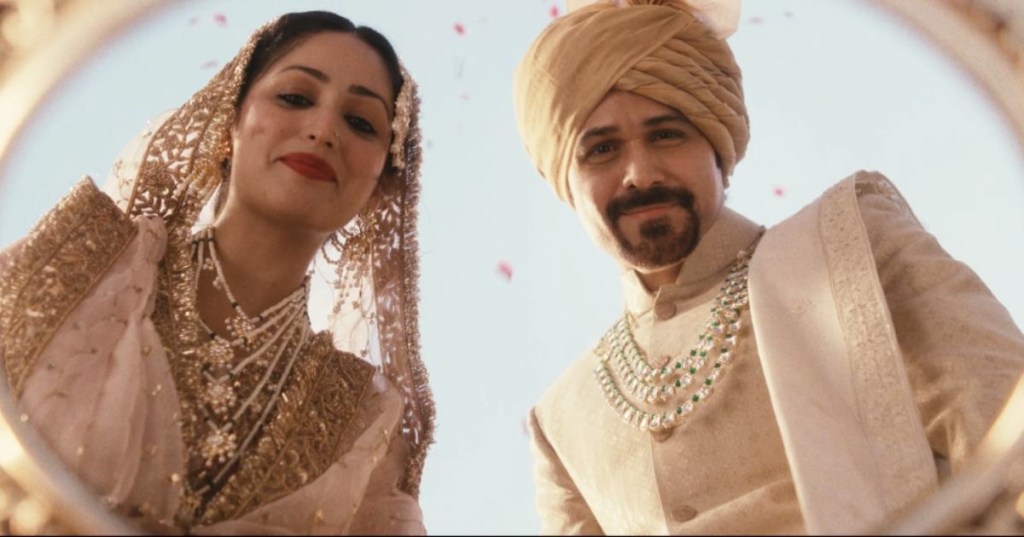
What follows is not melodrama but emotional attrition.
Emraan Hashmi’s character is particularly compelling because of how restrained—and therefore unsettling—his portrayal is. As an ambitious lawyer, he is not shown as overtly cruel or villainous. Instead, he is methodical, self-assured, and deeply conflicted. He believes in the sanctity of Islamic law, not merely out of faith or morality, but also out of ambition. His desire to defend religious law is intertwined with his professional goal: securing a landmark legal victory that would validate his interpretation of Islamic jurisprudence.
There are fleeting moments—almost imperceptible—where it seems like regret surfaces. A pause in his voice. A hesitation in his gaze. A sense that he understands the emotional cost of his actions. But those moments never translate into accountability. Instead, he appears to want the best of both worlds: moral righteousness without personal sacrifice, emotional authority without emotional responsibility.

This complexity is what makes Emraan Hashmi’s performance quietly effective. He resists easy judgement, portraying a man who justifies his choices through law, faith, and logic—while remaining willfully blind to the damage he inflicts.
Yami Gautam’s character, meanwhile, endures a steady erosion of dignity. Initially told that the second marriage was an act of charity, she later discovers it was driven by love and choice. From there, the humiliation intensifies. She is sidelined emotionally, denied companionship, and forced to watch her husband build a new life while she becomes invisible within her own home. When the second wife becomes pregnant, the imbalance becomes irreversible.

The film also powerfully captures the social reality of its time. Yami’s character and her family are ostracised—not just legally, but socially and emotionally. Silence becomes punishment. Isolation becomes policy. Yet the film is careful not to generalise. Not all men are painted with the same brush. The father figure, in particular, is written and portrayed with dignity and moral gravity. His presence offers quiet resistance—and when he passes away, the loss feels profound, symbolic of the vanishing support system around her.
When Yami’s character finally leaves the house with her children, it is not framed as rebellion or empowerment in the cinematic sense. It is simply an act of survival—a reclaiming of self-worth after prolonged emotional displacement.
What stands out most about Haq is its tonal control. One might assume the film to be relentlessly intense, but it isn’t. It is measured, composed, and deeply humane. The intensity is applied only where necessary, allowing emotion—not volume—to do the heavy lifting.
Yami Gautam delivers a performance that is understated yet piercing. She internalises pain rather than performs it, making her suffering feel authentic and lived-in. It is a performance that stays with you long after the credits roll.

Together, Yami Gautam and Emraan Hashmi are stalwart in this film. Their restraint elevates the narrative, making Haq not just a story about law, faith, and marriage—but about the quiet devastations that occur when legality is allowed to override empathy.
Haq is not an easy watch—but it is a necessary one. Thoughtful, emotionally precise, and skillfully crafted, it proves that powerful cinema doesn’t need to shout. Sometimes, it simply needs to tell the truth—calmly, clearly, and without flinching.
 Honest Reviews