Season five of Emily in Paris feels very much like comfort food you didn’t need but ordered anyway because it was right there on the menu. If you’ve binged the earlier seasons (as many of us shamefully have), this one is almost inevitable—escapist, glossy, and mildly absurd in a way that feels familiar rather than thrilling.

Let’s start with the obvious: the clothes. Yes, still fabulous. Yes, still Instagram bait. But noticeably more restrained this season. Emily’s wardrobe leans heavily into black-and-white palettes with the occasional pastel cameo, as though even the costume department decided to mature slightly—or at least lower the saturation.

Lilly Collins, however, does look unusually thin this season. This isn’t body-shaming so much as visual whiplash: she sometimes appears closer to a precocious pre-teen than the late-20s/early-30s marketing wunderkind she’s meant to be playing. Whether this reflects current fashion standards or simply aggressive styling, it’s hard not to notice—and harder not to be distracted by it.
Narratively, the season feels oddly fragmented. Gabriel’s presence is so minimal that you genuinely start wondering whether the show is slowly ghosting him. Is this a quiet goodbye? A narrative pause? Or just indecision dressed up as character development? Either way, Gabriel feels less like a romantic lead and more like an optional extra drifting in and out of frame.
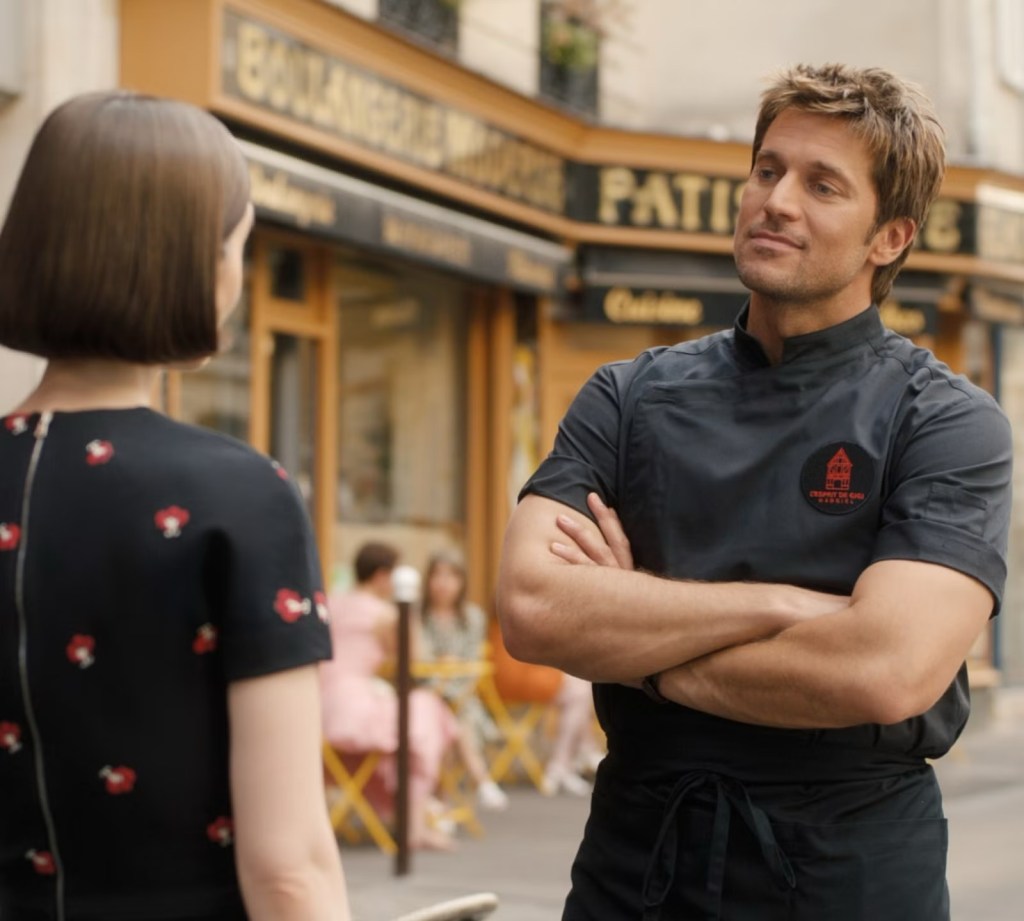
The shift from Paris to Rome should feel exciting—and visually, it does—but emotionally, it’s thinner than expected. Enter Marcello: charming, handsome, very much an Italian fantasy. And yet, the chemistry between him and Emily never quite clicks. It feels more like a postcard romance than something with actual pulse.

Ironically, the most compelling emotional arc belongs to Mindy and Alfie. Their dynamic feels warmer, messier, and more human than Emily’s latest love entanglement. Mindy Chen and Alfie bring a sincerity that the central romance currently lacks—and that imbalance is telling.

The supporting cast continues to do the heavy lifting. Luc’s chaotic love triangle is genuinely funny, leaning into the show’s self-awareness.

Sylvie, meanwhile, feels increasingly exaggerated—her endless carousel of lovers borders on parody. It’s glamorous, yes, but also exhausting. You stop being intrigued and start needing a flowchart.

Then there’s the Minnie Driver wildcard—an aristocratic, slightly absurd presence who feels parachuted in from a different show altogether. Fun, but tonally odd. If she’s set to play a bigger role going forward, one hopes the writing grounds her a little more.

And finally, the elephant in the couture showroom: the work. Every crisis is still magically resolved through a single conversation and a conveniently viral social media campaign. Emily insists she’s working relentlessly, yet we mostly see lunches, dinners, cocktails, and existential sighs over wine. One can only assume actual work happens off-screen, somewhere between outfit changes.
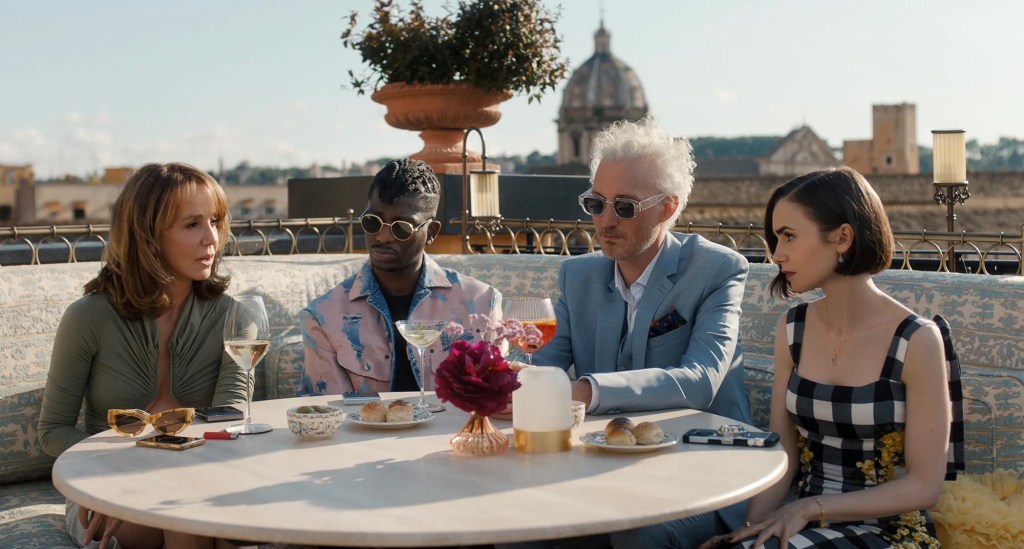
Overall, season five is… fine. Perfectly watchable. Perfectly fluffy. But not particularly memorable. Earlier seasons felt sharper, more playful, and more chaotic in a way that worked. This one feels like it’s coasting on its own reputation.
That said, Emily in Paris has officially crossed into cult-classic territory. And cult classics don’t lose viewers easily. You may complain, critique, and roll your eyes—but when season six drops, chances are you’ll still press play.
 Honest Reviews