Why everyone is obsessed with Music in Advertising

Photo by Grzegorz on Pexels.com

One thing is certain. One component that’s worth its weight in gold when it comes to advertising is the music. Music is emotion in the form of sound. The right piece of music can carry the ad or magnify its impact. So, just how important is it?

Brands are created out of stories. Brands commence with the product or the service but how people perceive and resonate with them are constructed out of stories : their source, who the owners are, the mission and vision. And these can be communicated in plenty of ways. A film is one medium and of course, soundtrack occupies prime importance. So, music becomes incredibly impactful when it’s an element of the message that helps build the brand.

It doesn’t change the narrative of the ad, but it could change its meaning. Music is a sheer emotional medium. It probably has little meaning, save for the emotional response it invokes. A story on the other hand has to make sense and have a structure. In music, the tune has a connect to your heart and its something you feel at a deeper level.

As James Stephens says, “what the heart feels today the head will know tomorrow”. Simply put, we imbibe information through the heart- and that’s right where music pierces us. That’s why it’s so compelling.

Brands have successfully used music to drive messages and inspire a change in consumer behavior. Take for instance the “Da Da Ding” campaign by Nike. In July 2016, Weiden and Kennedy kicked off its Nike Just Do It campaign, not with a commercial but with a music- video- turned- cult- favourite Da Da Ding, set in India. Directed by French director Francois Rousselet and set to upbeat music by Gener8ion, featuring American rapper Gizzle, it is a celebration of India’s female athletes across football, running, training, basketball and cricket.

The reason why Da Da Ding worked so well, was because there was already a story : a clarion call to women to pursue their sporty dreams. But more importantly, the story had a rhythm to it. And the music captured that rhythm and enhanced it.

Another commercial that was immensely successful was the the Levi’s® “Circles” ad released in 2017. Named by YouTube as one of the ten most watched ads of 2017, it was set to the song “Makeba” by artist Jain. The enticing pop beat and African rhythms accentuated by sprightly vocals, was so catchy, that it remained the top Shazamed ad for many weeks running in the UK.

Levi’s® has always been a brand that celebrates unity, and with “Circles”, it sent out a message of inclusivity and diversity through dance that traverses countries and cultures. The thing is Levi’s® is a trendsetter. Whatever song it uses, becomes stylish. The brand has always invested in music and used it as an advantage to make style statements.

Many times it’s hard to get a client to invest in music for the ad spot. It’s because most of them view communication as a science more than art. They are of the opinion that there should be a specific formula that would guarantee results. And you can tell them that based on your experience, it would work but you can’t give them ROI figures in advances. So, even if the track is likely to be a hit, it is certainly not a soft sell where a lot of clients are concerned.

So, how important is music to brands? While I’d like to say that it’s the most important thing, this may not be the relevant answer. There’s a danger in developing an identifiable sonic identity. Simply because, there is a clash between identifying the brand and being surprised by it. For instance, the Coca Cola mnemonic is recognizable but some would say it suffers from a lack of surprise value.

So, how do brands look at a piece of music and know that it will be magic? It needs to answer two questions : Is it the right culture fit? and Is it daring enough? The piece has to tap into people’s culture, how they live and behave. And it should say something, original and novel, something unexpected. Like Johnny Depp said, “Music touches us emotionally, where words alone can’t.” If done in the right spirit, music can possibly add magic to brands more than all the words in the world.

3 Thriller Books to read in 2020

Sometimes you want to escape into a romantic novel and at others, you want to lose yourself in an edge-of-the-seat thriller or whodunit. I love reading psychological thrillers, where complicated characters, altering perspectives and high drama plots keep you riveted until the end.

Fortunately, there are so many thriller books making their way onto the bestseller list, right from classic deception stories to family drama and supernatural twists, that we’re now spoiled for choice. So, if you’re looking for a dark tale to possess your imagination, you may want to check out three of my favorites this year.

#1. Girl in the Rearview Mirror

With twists and turns all through, Kelsey Rae Dimberg’s debut novel is a mix of power, politics and privilege. Philip and Marina Martin are a well-respected couple with a four year old daughter Amabel. Finn is recruited as a nanny to care for Amabel and is quite taken with the family and the wealthy house. She dotes on little Amabel. Philip is the son of a Senator and is viewed as the next candidate for a Senate seat. However, behind the respectable family public image, lurk dark secrets. Philip and Marina have them. And Finn has some of her own. But secrets don’t stay concealed for long. When a strange woman approaches Finn claiming she needs to talk to Philip, it takes Finn down a rabbit-hole of tragedy, a death and long buried secrets. She begins to investigate, pokes at doors that are best left shut, and puts her life in danger.

The author resorts to bread-crumbing to keep the reader engrossed until the last page. And it works pretty well. I couldn’t stop turning the pages. The book is a fast-paced read and everything comes together in the last few pages. The ending comes as a surprise but all-in-all a great book for psychological thriller junkies like me.

#2 The Curator

The Curator is the third book in the amazing Washington Poe series from M. W. Craven. It’s Christmas and when a woman opens a Secret Santa gift in her office, the last thing she’s expecting is severed fingers to fall out. Meanwhile, severed fingers turn up elsewhere: in front of a Cumbrian church and on a meat counter in a food hall. A division of the National Crime Agency is asked to investigate and they dispatch a team comprising  DI Stephanie Flynn, DS Washington Poe and civilian analyst Tilly Bradshaw. It appears to be a serial killer at play and he leaves a cryptic message at each crime scene, which baffles the investigators. They attempt to find a connection between the three crimes, but all they find are differences. Another twist comes through an FBI agent who is obsessed with a killer called the Curator.

I loved the book for many reasons. One of them being the dynamic between the three investigators, Flynn, Poe and Bradshaw. It’s respectful and supportive, and was refreshing in that it didn’t use the internal conflict angle to push the plot forward. As the investigation picks up pace, the twists and turns come in quick with an online dare slant. The author also utilizes the beauty of the Lake and Sharps area to draw in readers. The finale was definitely nail-biting and there is also a fair dose of action on the sands of Morecombe Bay and its islands. If crime thrillers are your thing, then The Curator is the one for you.

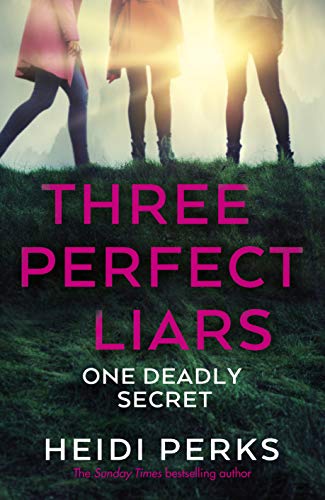
#3 Three Perfect Liars

Laura returns to work at Morris and Wood after her maternity leave, but the woman, Mia, who was hired as her substitute isn’t planning on going anywhere. On the contrary, she endeavors to make herself indispensable to all at work, except Laura. Laura feels blindsided as she attempts to balance work and life with a newborn. Mia has her secrets and if people knew why she was so keen to hold on to the job, they wouldn’t want her to stay. On the other hand, there’s Janie, who gave up everything to support her husband and his agency. She has her own secret to protect and will do just about anything to keep it concealed. Then, someone sets fire to the Morris and Wood building. But Who?

The story is unique, had a flow to it and hooked me from the start. With excellent writing and relatable characters, the format of the story draws you in competently. In the weeks leading up to the fire, there are chapters that present the three women’s viewpoints, helping you identify with their characters and emotions. The present day detective interviews are interspersed with these chapters making for a more intriguing read. Three Perfect Liars was downright engrossing, a slow-burn story and quite stimulating. While the ending may not be everybody’s cup of tea, the prose and the plot itself is immersing enough to keep you going till the end.

La la Land : A Romantic movie for the Unromantic

What does romance mean to you? Is it a relationship that comes full circle, closes the loop and ends up as a happily-ever-after? Is it unrequited love? Is it an affair where love never ends, but lives on even after the relationship has ended? If you’re sick of the regular romantic movies, where a happy ending is precluded at the start of the movie, then La La Land may be just that breath of fresh air you need to inhale.

The movie is a visual spectacle and a musical escape. The stars shine brighter than those in the sky. The songs are melodious and haunting. And the camera transports you to another world where dreams come true amidst love that lasts and relationships that don’t.

Meet Sebastian (played by Ryan Gosling) and Mia (Emma Stone). Mia is a struggling actress, working in a local coffee shop. She goes out with her friends to a party, after missing a call back from her most recent audition. After her friends split, she enters a restaurant and comes across Sebastian playing the piano. They have a somewhat awkward encounter as Sebastian is annoyed after getting fired from his job at the restaurant. The two run into each other again, months later, and over time they begin dating and fall intensely in love. However, they have their share of conflicts as they pursue their respective dreams: Sebastian as a jazz artist and Mia as an actress. They also guilt-trip each other into aiming higher to fulfill their aspirations. Their relationship ultimately falls to the wayside as a result of dueling ambitions.

“I’ll always love you.”

Mia tells Sebastian as they decide to part ways to pursue their respective careers. Sebastian responds with a calm “You know I’ll always love you too.” And then they go their separate ways.

Given my romantic inclinations, I was rooting for Sebastian and Mia all along. Why couldn’t they make things work? It’s not like they both wanted to be actors. But La La Land does have a point : Can two mega stars co-exist peacefully in a relationship?

Fast forward a few years, and it is revealed that Mia is married to someone else, has a child and is a successful actress. Sebastian, on the other hand, has fulfilled his ambition of owning a jazz club. The two cross paths when Mia and her husband wander into Sebastian’s club, pulled in by the music that they hear while strolling.

Sebastian is playing the piano. They catch each other’s eyes, share one last longing look and then Mia departs with her husband.

The ending is bittersweet as you watch the lead actors part ways once again after a brief encounter.

The final look

The movie ends and you are left with your own mixed emotions. While the cinematography and music is definitely par excellence, the love story was genuine and realistic. It showed two young people with stars in their eyes and love in their hearts, pursuing their own big dreams at cost of their relationship. There isn’t a tidy ending. But then love and romance, even in real life, is hardly neat and tidy. Like the Director quips, “To me, if you’re telling a story about love, love has to be bigger than the characters.”

In the movie, love is the third character and lives on even after the couple separate. Even though the relationship may be over for all intents and purposes, love endures and that’s sort of the great thing about the movie.

 However, it does seem that there are no regrets at all. Both get what they want and you realize that perhaps their greater love was the one that they had for their dreams.

The film wins because it makes its audience fall in love with Mia and Sebastian and then gives you a gentle jolt as love is relegated to the backburner when faced with daily obstacles. Mia and Sebastian may not have got their happy ending, but they took comfort from knowing they would always love each other – and in their words, “always have Paris.”

Refusing to weigh in on the clash between romantic nostalgia and practical realism, La La Land is the perfect romantic movie for the unromantic. And for the romantic too, if you don’t mind a generous dose of reality.

Comparison of The Alchemist and The Secret

Those who have read both books may argue that they are very different in terms of writing style, premise and tenets. Yet, after reading them I did feel there was a common thread of thought. Let’s take a look at the summaries.

The Alchemist by Paulo Coelho

The book follows the story of Santiago, a shepherd who has a recurring dream. Believing it to be prophetic, he embarks on a journey to Egypt to learn the meaning of life. In the course of his travels, he comes across many characters, including an “Alchemist”, who help hims understand his true purpose and teaches him lessons about accomplishing his dreams. Santiago’s journey takes him to Egypt, in search of his “treasure.” However, in the end, Santiago is faced with the revelation that the “treasure” he was seeking was in the place where he began his journey. The main message is, “when you want something, all the universe conspires in helping you achieve it.”

The Secret by Rhonda Byrne

The secret is a self-help book that reiterates that you have the ability to be whatever you dream of being. So basically, you are what you think. The main premise of the book is that the universe operates based on the law of attraction, and you can create your dream life by using this knowledge to your advantage. The book teaches you how positive thinking can help you get the best results in relationships, career, finances and health. So, positive thoughts attract desired situations and circumstances. Conversely, negative thoughts attract bad situations and stressful circumstances.

Comparison of The Secret and The Alchemist

I read The Alchemist when I was in high school and The Secret maybe around six years ago. The Alchemist is written in story format wherein the central idea of the book is conveyed using allegories and metaphors. As a high school student, it was fun to delve deep into the idealistic meanings and messages of the book.

On the other hand, The Secret is written as a guide book. Each chapter has specific instructions and is peppered with a few anecdotes along the way.

Messages from The Alchemist

In terms of takeaways, The Alchemist has several core messages interwoven into the fabric of the story and its characters. Some of the main messages are :

  • There is only one way to learn – through action” – This is self-explanatory
  • When you want something, all the universe conspires in helping you achieve it” – In other words, trust in your dream and don’t let yourself be fooled into thinking it’s impossible.
  •  “Wherever your heart is, there you will find your treasure” –  Your heart is a treasure trove and when you meditate, pray and be silent- you’ll find the answers you seek.
  • ” It’s the possibility of having a dream come true that makes life interesting” – Keep dreaming and visualising the things that you desire. Your request reaches the Universe and as long as you stay in a place of gratitude your dreams will come true.

Messages from The Secret

The Secret has similar messages but uses different words to convey them. The main messages from the secret may be summed up as under :

  • The Universe operates on the law of attraction – This is the main law that governs the working of the Universe. You are what you think, you get what you think about most.
  • There are three steps to creating the life you want – Ask-Believe-Receive. Ask for what you want, believe that it is yours and get into the receptive mode to receive it.
  • Let go of resistance and realise that you are in control of your life – The secret to life is understanding that you’re one with the universe, and you’re in harmony with everyone else and not in competition. There’s no limit to abundance and there’s plenty to go around for everyone.

Similarities :

There were several points of similarity between the two books. Both extolled the virtues of practicing gratitude and counting your blessings daily.

“The simple things are also the most extra-ordinary things and only the wise can see them.”- The Alchemist

“Gratitude will shift you to a higher frequency and you will attract much better things.” – The Secret

A lot of emphasis is laid on dreaming and visualising in the books in order to turn aspirations into reality.

“I’m like everyone else – I see the world in terms of what I would like to see happen, not what actually does.” – The Alchemist

“Your thoughts become things. Everyone has the power to visualize.” – The Secret

Both books encourage you have unrealistic and larger than life expectations. If people chose to accept things as they are, some of the greatest innovations and inventions would never have been possible.

The underlying message in each of the books is that when you want something, and believe that you will receive it, The Universe will somehow make it available to you.

“When you focus your thoughts on something you want and you hold that focus, you are in that moment summoning what you want with the mightiest power in the Universe.” – The Secret

When you want something, all the universe conspires in helping you achieve it” -The Alchemist

The Differences :

While I didn’t find many dissimilarities between the books, there was one glaring difference. The Alchemist was action-centric whereas The Secret was more thought-centric. The Alchemist encourages making decisions and taking action through a process of growth, change and evolution. On the other hand, The Secret seems to endorse visualization and thinking more than acting and doing. Moreover, while The Alchemist recognizes the possibility of failure and the importance of bouncing back, The Secret’s supposition is based on preventing failure even before it occurs merely by controlling your thoughts and focussing on the positives.

To conclude, I enjoyed both books for very different reasons. I would veer slightly in favour of The Alchemist, mainly because its story was told so endearingly and its many allegorical references made for a stimulating read. Perhaps, it has to do with the fact that I read it first at a transitional phase of my life. The Secret is definitely a powerful book and can’t be ignored. If you like self help books, that aren’t stories and immediately get to the heart of the matter, then this is the book for you. All said and done, both books are inspiring and empowering and if read in the right spirit, can change your life.

3 Must-Watch Movies about Advertising and Marketing

Usually when you begin working in a particular industry, you want to know everything about it. Therefore, watching movies about it is certainly relatable. In my case, it was just the reverse. Ever since I began working in advertising, I wanted to dissociate from anything related to it in my off-hours; most especially watching movies that were about advertising. The main reason is that it was hard to relate to the glamorised version of the industry that the movies showcased. Anyhow, I’ve since gotten over that and managed to devour a few movies that were advertising and marketing centric. While there are many movies in this category, here are my three favourites :

# 1 The Greatest Movie ever Sold (2011)

The Greatest Movie ever Sold was born from an idea to explore product placement in movies and TV shows, with a unique twist. The angle was that this movie would be totally funded by product placement. So what this means is that we’re watching a movie about the creation of the movie we’re watching, right from pitching for funds to its ultimate release. The movie follows the filmmaker as he endeavours to pitch the concept to various brands and zero in on the 12 companies to fund the $1.5 million budget.

The movie covers the process of branded sponsorships in movies and television, co-promotion, pitching and funding. The intriguing parts of the movie include a trip to Sao Paulo, where outdoor advertising has been prohibited by law. Another interesting vignette is the use of MRI machines that analyse the brainwaves of viewers to ascertain which ads generated an intense emotional response. Before watching the movie, I had this perception that it would be quite mundane and overtly commercialised. However, I’m glad to say that I found it incredibly entertaining and some moments are simply laugh out loud. As hilarious as it is engaging, the The Greatest Movie Ever Sold is also an insightful look at how advertisements have infiltrated and affected our culture.

#2 What Women Want (2000)

While What Women Want is an entertaining rom-com, it has useful lessons for the marketer seeking to rouse his target audience. The film revolves around an ad-man Mel, who gets electrocuted and suddenly has the power to listen in to women’s thoughts. He uses this advantage to craft messages that connect emotionally with the female target audience. The film is a reminder that a consumer’s purchase behaviour is driven by hopes, fears, dreams and capricious emotions. It demonstrates how advertising appeals to emotion and not logic. The Nike pitch scene in the movie displays how distinct we have to be in triggering the emotional impulses of our target audience.

What triggers your target audience? Is it the desire to feel cool, be powerful or popular? What would you learn if you could eavesdrop and hear your target market’s thoughts? What Women Want is a funny movie with powerful learnings about emotions, triggers and impulses. To create an effective commercial, every ad professional should study their prospect inside out. And if you need to go to extremes? Well, nobody said the job was easy.

# 3 The Social Network (2010)

Mark Zuckerberg, a Harvard undergraduate and computer whiz, conceptualises Facebook in 2003, and it becomes a global social network. Fast forward six years later. He is one of the youngest billionaires and discovers that his overwhelming success has put him on the receiving end of two lawsuits, one from his erstwhile friend.

The Social Network is a must watch for advertisers and marketers for several reasons. The movie highlights how the execution of an idea is as important as the idea itself. In the movie Zuckerberg is accused by the Harvard Winklevoss twins of stealing their Facebook idea. Zuckerberg retorts “If you guys were the inventors of Facebook, you would have invented Facebook.” So, an idea has no value unless it is executed. Another interesting distinction is drawn between the 3000 pound marlin and the 14 pound trout. If you want to make a buzz, you should publicise your bigger breakthroughs as opposed to your smaller achievements. Perhaps, the most important takeaway from the movie is that marketing, like fashion, never ends. It simply evolves. Just like Facebook has and continues to do.

3 Popular Fiction Books of All Time

The Covid-19 pandemic has left us with fewer working hours and plenty of time at our disposal. So, if you’ve been planning to read more, there’s no time like the present to grab a book and get started. But where do you begin? There are so many books being published daily and it’s hard to make a choice. Why not take the plunge with the most popular fiction books of all time?

#1 Don Quixote

With sales of more than 500 million copies, Don Quixote is undoubtedly the best-selling book of all time. The Spanish novel written by Miguel de Cervantes, was initially published in 1612. Originally viewed as a parody of chivalric romances, the story follows the life of the noble hidalgo named Alonso Quixano. He reads so many chivalric romances, that he attempts to revive chivalry by forming an alter-ego called Don Quixote. The story details his expeditions as he takes up lance and sword to serve the helpless across the country. Don Quixote is touted to be “the first modern novel”, and is universally known as the best literary work ever written. 

# 2 A Tale of Two Cities

A Tale of two cities by Charles Dickens tackles the topics of revolution, duality and aristocracy. Set in sprawling London and revolutionary Paris, before and during the French revolution, it is the story of the plight of the peasants in France, weakened by the French aristocracy in the years leading up to the revolution. With scenes of large-scale mob violence displayed by the revolutionaries against the aristocrats, and unsavoury social parallels with life in London, the book enumerates the eighteen year imprisonment of French Doctor, Manette, in a Bastille prison, Paris; and ultimately his release when he goes to live with his daughter Lucie in London. Selling an astounding 200 million copies, A Tale of Two Cities is believed to be Charles Dickens best known work of historical fiction.

# 3 The Lord of the Rings

Filled with philology and folklore, Tolkien’s epic fantasy novel was initially published in three parts : The Fellowship of the Ring, The Two Towers and The Return of the King.  The books details the story of a group of heroes who set forth to save the Middle-Earth from evil. The future of the earth depends on the One Ring, which was lost for centuries. Destiny has put it in the hands of a Hobbit named Frodo. Evil forces are in search of the ring but a harrowing task lies ahead for Frodo, who becomes the “Ringbearer” and has to destroy the One Ring, where it was forged- in the fires of Mount Doom. These novels were considered to be the trail-blazers in the high fantasy genre and have sold more than 150 million copies worldwide.

Reading between the Advertising Brief

Photo by Pixabay on Pexels.com

In advertising, most briefs serve one purpose only : saving skin when you-know-what hits the ceiling. Most creatives will not begin work without access to a brief. And most account managers will create briefs with ambiguous words that cover everything, yet could mean anything. God forbid, if the campaign fails, nobody can lay blame on the no-man’s land brief.

As agency professionals, we are aware that creating an effective campaign from a vague brief is like a blind date : meeting someone you’ve never met before and hoping to click anyway. Even a blind date may have better chances of success because you’ve probably been set up by someone who knows you. Bad briefs are more like Russian roulette : playing the game anyway, and hoping the campaign doesn’t get shot down.

It’s intriguing to see how managers and creatives tackle briefs. While some take a flying leap and immediately begin ideating, others use the brief to brainstorm and then get on with the process of coming up with ideas. The main issue with both these approaches is the assumption that the brief is accurate.

This can be resolved by truly getting to the heart of the matter, studying the brand, understanding what exactly it is trying to achieve and comparing that against the brief given to you. Because, let’s face it. Sometimes, clients either don’t know what they want or end up misstating the problem. And truth be told, it isn’t their fault. Very often they haven’t been asked questions, and more importantly, the right questions.

The right questions are frequently not asked because it involves a lot of spadework. Digging deep, gaining an in-depth understanding of the client’s business, its competitors, internal climate, its issues at a grass-root level. Truly getting to the soul of the business, and not just the advertising and marketing aspect. Only then can you solve a problem that exists, rather than cater to the statement of a perceived problem. Like Virginia Magaletta aptly said, “Start with nothing and you get anything.”

As vague briefs go, it takes all kinds to make the advertising world go round. There’s the “Tight Fit,” where the brief is so inflexible, that there isn’t any wiggle room at all. You wonder why the client didn’t do it themselves. Then there’s the “Flip-flopper.” The brief which changes frequently, the client is constantly inspired by things they’ve seen and keeps the agency on its toes for all the wrong reasons. And of course, all marketers would have come across “The Fantasist”– the brief with the highest expectations, but the lowest budgets and the tightest deadlines.

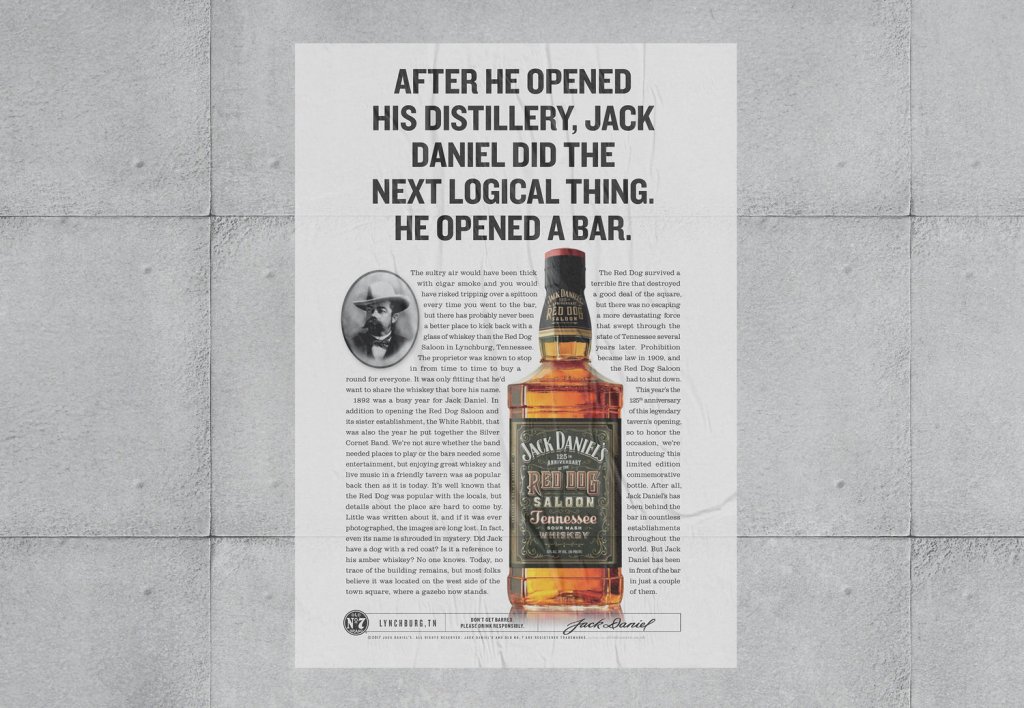
There’s no lack of examples of bad briefs.

So what constitutes a correct brief? One that has stated the correct problem through a deep understanding of the client’s business. Eventually, it should provide a guideline to ‘what to do’ and not ‘how to do’ it. And most importantly, it should state a problem that exists and not one that is imagined.

3 Best Cook Books to Read in 2020

I enjoy reading books on food and cooking for two reasons. One, it’s a surefire way to whet my appetite to try out new flavours and cuisines. Two, writing a book on food or cooking isn’t as easy as it seems. So, when I come across a book with beautiful words unfolding on the page, integrating recipes with tender memories and personal anecdotes, I’m hooked.

I’ve listed my top three favourites. Each one has revisited ancient recipes, re-examined roots and captured homegrown habits. While the world is galloping forward, it’s sometimes good to trot by the past in terms of the culinary treats it offered. With thoughtful instructions, appealing imagery and lovely recipes, these books perfectly capture the joy of daily meals and exotic preparations.

3 Best Cook Books to Read in 2020

#1 Seven Spoons by Tara O’Brady

I’ve been a fan of Tara O’Brady’s blog Seven Spoons for as long as I can remember. So, when I heard, a book was on the way, I was thrilled. The book is a food memoir cum cook book and it does very well on both fronts. It is beautifully designed with lovely minimalist photography and contains chapters dedicated to various types of meals (for eg. breads & breakfast, lunches, soups & starters etc.).

The recipes are preceded by long stories that I found a pleasurable and engaging read. Most of them make use of everyday ingredients and her comments on the recipes are quite insightful. Mouth-watering delights like the roasted peaches with glazed sesame oats and the basic, great chocolate chip cookies are crowd-pleasers and highly satisfying to make and eat. It must be said that Tara relies more on pure instinct than on precise instructions and it works in her favour. From the book, it’s clear that Tara is the mistress of her kitchen and her warm prose and eclectic recipes are sure to win your heart and your palate.

#2 Meals, Music and Muses by Alexander Smalls and Veronica Chambers

From an illustrious run as an opera star to a bright career as a chef and restauranteur, Alexander Smalls has had quite a journey. The book is a cheerful mix of both his passions : food and music. It makes for a compelling read with stories and recipes from his early days in the South, spiced with his musical heritage. Each chapter is conceptualised around a genre of music and has recipes like Hoppin’ John Cakes , Okra Skewers and Frogmore Stew that he has reimagined so wonderfully.

Meals, Music and Muses is a lip-smacking symphony of finely tuned words, sounds and haute cuisine that reflect a life well lived through recipes passed down the generations, musical forms studied, instructions from friends and the meals shared along the way. Read the book and take a seat at his table that lays out lyrical culinary magic on a plate.

#3 Everything is under Control by Phyllis Grant

Though written fairly early in life, Phyllis Grant’s memoir makes it clear that she has been through a lot. It’s all laid down in stark detail as she recounts seminal memories from her early youth through taut vignettes. The book traces her journey from a young dance student at Juilliard, her weight insecurities and unwanted advances at work to acute post-partum depression, the joy of discovering her life’s purpose and her subsequent disenchantment with it.

Her love for food is underscored throughout the book. As a child, as she witnesses her grandmother cooking and then recounts her days in Juilliard where she indulges in New York’s culinary treats. Finally, she takes the leap and begins working in restaurants as a pastry chef and garde-manger. But that doesn’t last long and she ultimately takes pleasure in cooking for her husband and children. In the final section, Grant offers a plethora of her favourite recipes stitching in personal memories, precise instructions and impeccable advice, confirming her talent as a professional chef and food writer. With recipes ranging from avocado bowls to caramelized onion tart with anchovies and olives and hazelnut butter cookies, here’s all that you would love to find – both in a book and a meal.

3 best Advertising Books to read in 2020

When you’re part of the advertising fraternity, inevitably you’ll want to either enhance your knowledge or expand your perspective. Fortunately, there are some outstanding books written by phenomenal advertising veterans that you can get your hands on. Whether you need to hone your skills or start from scratch, here are some books that will help you gain invaluable insights.

3 Best Advertising Books to read in 2020

#1. Ogilvy on Advertising

I remember reading this book when I started my career in advertising as a copywriter. At the time, I barely knew the difference between writing copy, and well, just writing. This book certainly shifted my perspective in all the right ways. It’s old, but gold. The book was first published in 1983 and has been a hit ever since. David Ogilvy covers just about everything, right from crafting content, brand positioning and image building to the power of big ideas, word-of-mouth, direct response and creativity. Digital marketing and social media isn’t touched upon obviously, but the tenets in the book can be applied across all marketing platforms and that’s the beauty of the book. Humorous and easy to read, this book can definitely change your whole approach to your advertising career, no matter what your role is.

#2 Zag

“When everybody zigs, Zag,” says Marty Neumeier. If you’re running short of time, Zag is probably the book you want to read. It’s quite short and you can finish it in a day or less. But don’t mistake the brevity of content for lack of content. This book definitely packs a punch. The main takeaway from the book is differentiation. You have to demonstrate to customers why and how your product is not just different, but radically different. Zag features a brand marketing model represented through four variables : Focus, Difference, Trend and Communication. The book guides you through 17 steps to leverage all four elements. Neumeier also cleverly makes use of the Rock-Paper-Scissors analogy to depict companies at different stages. Zag is a memorable read and definitely the cool kid on the advertising block.

#3 Hey Whipple, Squeeze This

This book is a little different, in the sense that it doesn’t have one overarching idea that represents the book as a whole. Rather, it comes with a variety of recommendations that are presented with clarity. An enjoyable read, it contains a step-by-step guide to every aspect of advertising. What makes this book awesome is not its greatest print ads of the last 60 years or its amazing advice on how to create ads. What makes it stand out is how it wonderfully captures the essence of working in a first-rate creative department. With chapters dedicated to print, online media, television and radio, it’s a well-structured book and flows well from start to finish. Learn about the value of authenticity, simplicity, conflict and relevance in an advertising and marketing context. Moreover, its intriguing chapter headers like “Pecked to Death by Ducks” and “Why is the Bad Guy always more Interesting” pique your interest to delve into the knowledge and insight this book offers. Needless to say, I was certainly entertained.

Why Advertising is not only about Advertising

Though I’ve found it hard to put into practice myself, I’ve always believed that a life of transformation is better than a life of comfort and constancy. For the same reason, I admire those who can multi-task, those who have led a life of variety, as opposed to those who have remained single-minded and focussed on only one particular thing or one particular industry.

Simply put, I have always been in awe of those who’ve led a fulfilling life more than a fulfilling advertising life.

You would imagine that the two are somehow related. Well, not necessarily.

Concentrating or specialising in one niche definitely appeals to employers and it’s easier to focus on being amazing at one thing. However, a growing yield of research indicates that creative cross-training- pursuing multiple hobbies, interests and unrelated jobs- can actually stimulate our ability to learn and grow, making us even more productive in our traditional roles at work.

This opens the generalist vs. specialist debate. When we’re little, we’re asked what we want to become when we grow up? A doctor? An engineer? A lawyer? There is never the consideration that we can be more than one thing. As we grow older, there’s the innate desire to have tried different things. A doctor who writes books in his spare time. An engineer who starts a gaming company as a side hustle. The lawyer who spends his leisure time painting and creating art. These are all examples of a desire to add variety to routine occupations.

Though there’s hardly anything routine about advertising, and it’s arguably the most creative job on the planet, it’s possible to get burnt out quickly and fall into a rut. So, it’s good to have a passion project that you spend time on apart from your main occupation.

Like Steve Jobs said, “Creativity comes from spontaneous meetings, from random discussions.”

Perhaps, it’s why I’m drawn to people who’ve tried a variety of things in life. It doesn’t even matter if they succeeded or not. What matters is that they’ve tried and have the ability to identify the missteps and successes.

So people who have backpacked across the world, written plays, tried stand-up comedy, played in a band, created art installations and painted egg shells will always be more appealing to me than someone who has learnt advertising, worked in advertising and created advertising.

It doesn’t mean that those who work in advertising aren’t important or necessary- they definitely are. But having cross-disciplinary interests and cross-cultural experiences broadens your perspective and helps add incredible value to the creative process.

And I’m not glorifying the “butterflies”, who flit from one occupation to another. I’m referring to those who truly shed blood, sweat and tears trying to make things work. The ones who are committed to making a go of it and are genuinely gutted when things fail. Art Markman, cognitive scientist calls these people “Expert Generalists.”

While these people may be labelled as fickle and whimsical, in reality they often have the last laugh. To quote Bruce Nauman, “It’s interesting when you make things or do things that open up the possibilities for making more things or different kinds of things.”

What you do in advertising, especially in a creative role, is often the sum total of all your experiences. So, embracing variety definitely has its perks.

The destination may be the same. The path is different. And infinitely more interesting.