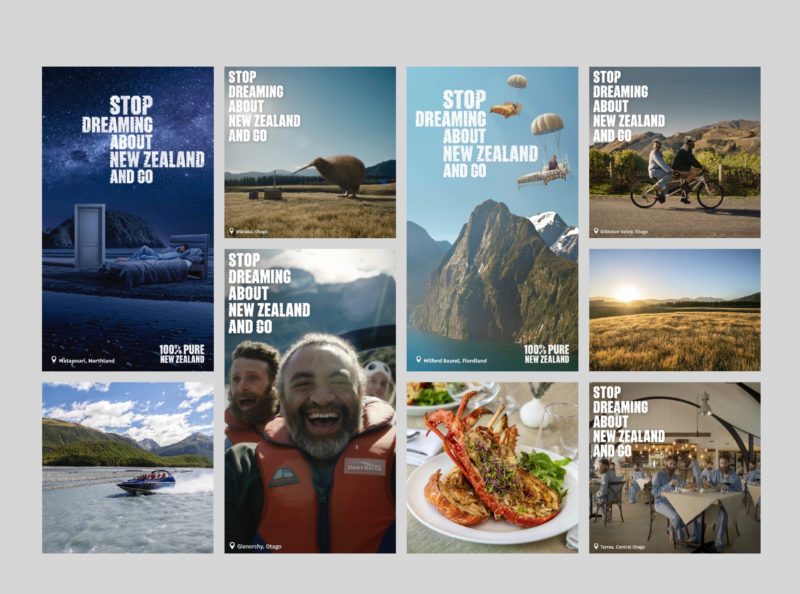
Hold on to your hats (and your Hobbit ears), because we’re diving into the “100% Pure New Zealand” campaign. Launched way back in 1999, this legendary marketing blitz by Tourism New Zealand is like the Energizer bunny of tourism campaigns—it just keeps going and going! The goal? To spotlight the jaw-dropping beauty, unique landscapes, and cultural awesomeness of New Zealand, making it THE place to visit for travel junkies worldwide. Think of it as the love child of nature’s splendor and adventure’s thrill.
Main Campaign Thought:
The brainchild behind this marketing marvel is simple yet powerful: New Zealand is 100% pure. Pure adventure, pure nature, pure culture, and pure awesome. The campaign screams, “Hey, world! Come experience New Zealand in all its unfiltered, unspoiled, and unadulterated glory!” It’s like a refreshing gulp of crisp mountain air in a world full of smog.
Inspiration of the Campaign:
The muse for this campaign? New Zealand’s spectacularly diverse and Insta-worthy landscapes. From towering mountains and lush forests to pristine beaches and vibrant cities, New Zealand’s scenery is like a greatest hits album of Mother Nature. Throw in the rich Maori culture and a sprinkle of sustainability, and voila! You’ve got the perfect recipe for a killer tourism campaign.
Main Headlines and Video Ideas:
Headlines:
“Discover 100% Pure Adventure in New Zealand”
“Experience 100% Pure Nature”
“Uncover 100% Pure Culture”
“Journey to 100% Pure Tranquility”
“Explore 100% Pure Diversity”
Video Ideas:
A jaw-dropping drone tour of New Zealand’s greatest hits, from the Southern Alps to North Island’s dreamy beaches.
High-octane adventure clips: bungee jumping in Queenstown, hiking in Fiordland, and surfing in Raglan.
Cultural immersion: get a taste of Maori traditions, dance, and art—complete with a haka performance!
Real-life testimonials from travelers who’ve been wowed by New Zealand’s natural beauty and friendly vibes.
A sustainability showcase, featuring eco-friendly travel tips and conservation efforts.
Impact of the Campaign: This campaign has been a total game-changer for New Zealand’s tourism industry. Visitor numbers? Skyrocketing. Tourism revenue? Ka-ching! The authenticity and emotional punch of the campaign have made New Zealand a top-of-the-bucket-list destination. In short, it’s been a grand slam, home run, and touchdown all rolled into one.
Communication Channels:
The campaign’s omnipresent, popping up everywhere like an enthusiastic tourist:
TV commercials
Social media (Facebook, Instagram, YouTube)
Print ads in glossy travel mags
Online advertising and SEO wizardry
Influencer collabs and travel blogs
Media buzz and PR stunts
Official tourism websites and handy-dandy mobile apps
Awards Won:
The “100% Pure New Zealand” campaign isn’t just popular—it’s award-winning. Here’s a quick trophy count:
World Travel Awards: World’s Leading Tourism Authority Website
Tourism for Tomorrow Awards
PATA (Pacific Asia Travel Association) Gold Awards
Agency Responsible for the Campaign: The masterminds behind this genius? WPP AUNZ (formerly M&C Saatchi). They’ve been the creative wizards crafting and sustaining this iconic campaign.
Pros and Cons:
Pros:
Brand Identity: Nailed it! The campaign has crafted a strong, recognizable brand.
Emotional Appeal: Tugging at heartstrings and making people yearn for that Kiwi adventure.
Sustainability: Aligns perfectly with the global trend of eco-friendly travel.
Longevity: Like a fine wine, it’s gotten better with age, building trust and familiarity.
Cons:
High Expectations: Portraying NZ as a pristine paradise sets the bar high, sometimes too high.
Market Saturation: Continuous exposure might lead to a bit of “meh” from some folks.
Conclusion:
The “100% Pure New Zealand” campaign is the rock star of tourism marketing. With its blend of authentic charm, emotional appeal, and sustainability, it’s turned New Zealand into a dream destination for travelers. While managing the influx of tourists and keeping expectations realistic can be tricky, the campaign’s success and accolades speak volumes. It’s a textbook example of how to create a tourism campaign that resonates deeply and stands the test of time. Now, who’s ready to book a ticket to this paradise?
In the crowded world of tourism campaigns, “Inspired by Iceland” stands out like a puffin in a penguin parade. Initially, launched in 2010 by Promote Iceland, this campaign took the world by storm—or rather, by volcanic eruption—following the infamous Eyjafjallajökull explosion. With clever headlines, quirky video scripts, and a whole lot of Icelandic charm, “Inspired by Iceland” has managed to make Iceland not just a place to visit, but a place to fall in love with. Let’s dive into what makes this campaign so, well, inspiring.
The Campaign Overview
“Inspired by Iceland” isn’t your average tourism campaign. It’s like that quirky friend who always has the best stories and makes you want to pack your bags and join the adventure. Created by Promote Iceland and brought to life by the creative wizards at The Brooklyn Brothers, this campaign aimed to give Iceland’s tourism a boost after the Eyjafjallajökull volcano disrupted travel plans and covered parts of Europe in ash.
Catchy Headlines and Quirky Video Scripts
This campaign isn’t just about pretty pictures of landscapes (though Iceland’s got plenty of those). It’s about connecting with people in a fun, memorable way. Check out some of these snappy headlines and video script snippets:
Headlines:
“Ask Guðmundur: The World’s First Human Search Engine”
Guðmundur: “Ask away! Your Icelandic adventure awaits.”
Who’s the Campaign Targeting?
“Inspired by Iceland” is for everyone who’s ever dreamed of adventure, culture, and jaw-dropping landscapes. The target audience includes:
Adventure Junkies: Those who live for adrenaline rushes and rugged landscapes.
Culture Vultures: Folks fascinated by history, art, and quirky local customs.
Nature Lovers: People who find peace in the great outdoors, from glaciers to geysers.
Digital Nomads: Modern-day wanderers who want to work remotely in scenic locales.
The Impact: From Obscurity to Stardom
The campaign didn’t just put Iceland back on the map—it made it the star of the show. Here’s a look at its impact:
Tourist Boom: Visitor numbers skyrocketed, setting new records year after year.
Global Buzz: Iceland became a hot topic in travel circles and on social media.
Positive Press: The campaign earned glowing reviews from travel writers and bloggers worldwide.
The Good, the Bad, and the Quirky
Every campaign has its ups and downs. Here’s a quick rundown of the pros and cons of “Inspired by Iceland”:
Pros:
Creative Genius: The campaign’s unique approach and engaging content were a breath of fresh (Icelandic) air.
Authenticity: Featuring real locals like Guðmundur made the campaign feel genuine and relatable.
Wide Appeal: It resonated with a diverse audience, from thrill-seekers to cultural aficionados.
Cons:
Environmental Concerns: The influx of tourists raised sustainability issues, with worries about the impact on Iceland’s pristine environment.
Overcrowding: Popular sites sometimes got a bit too popular, leading to congestion and strain on local resources.
Awards and Accolades
“Inspired by Iceland” isn’t just popular—it’s award-winning. Some of the accolades include:
European Excellence Awards: Best tourism and travel campaign.
Webby Awards: Recognized for its innovative use of digital media.
Effie Awards: Celebrated for its effectiveness in marketing.
The Creative Brains: The Brooklyn Brothers
Behind every great campaign is a team of creative geniuses. The Brooklyn Brothers, a global advertising agency known for their out-of-the-box thinking, partnered with Promote Iceland to create this unforgettable campaign. Their combined efforts turned a simple tourism promotion into a cultural phenomenon.
Sources of Inspiration
The essence of “Inspired by Iceland” came from the island’s unique blend of natural wonders, rich history, and the spirited resilience of its people. It’s a campaign that captures the heart and soul of Iceland, inviting the world to experience it firsthand.
Conclusion
“Inspired by Iceland” is more than just a tourism campaign—it’s a love letter to a remarkable country. With its clever headlines, engaging videos, and authentic storytelling, it has successfully positioned Iceland as a top travel destination. Whether you’re looking for adventure, culture, or simply a breathtaking escape, Iceland offers an experience that’s truly inspired.
Tourism ads are key to drawing in travelers and sparking their dreams of adventure. Over the past three years, some campaigns have changed the game. They’ve set new standards for creativity and success in travel marketing.
I’ve been following these campaigns and I’m amazed by their impact. One that really caught my eye is the “100% Pure New Zealand” campaign. Imagine stunning landscapes, towering mountains, clear lakes, and friendly faces in a place known for adventure.
This campaign showed off New Zealand’s beauty, outdoor fun, and unique culture. It made viewers want to dive into the travel experience. It won awards like the Cannes Lions and boosted tourism significantly.
Another standout is the “Inspired by Iceland” campaign. It focused on personal discovery and the beauty, culture, and people of Iceland. It used stunning visuals and stories to encourage travelers to see beyond the usual spots. This campaign won awards and helped increase tourism in Iceland.
These campaigns are just a few examples of how tourism ads have changed the industry. In this article, we’ll look at more campaigns, their impact, and what made them successful. We’ll also discuss their strengths and weaknesses for a full review of their success.
Key Takeaways:
Tourism advertising campaigns can change how we market travel and influence traveler choices.
The “100% Pure New Zealand” campaign wowed viewers with its beauty and adventure, boosting tourism.
The “Inspired by Iceland” campaign emphasized personal discovery and real experiences, earning awards and more tourists.
This article will explore more impactful campaigns, looking at their strengths, weaknesses, and success.
Stay tuned to learn about the campaigns that have changed how we view and experience travel.
Captivating Audiences with Stunning Visuals: “100% Pure New Zealand” Campaign
The “100% Pure New Zealand” campaign has been a hit for over 20 years. It has shown off New Zealand’s stunning nature through amazing travel videos. This campaign has made people fall in love with the country.
It makes people feel amazed and ready for adventure with its beautiful visuals. The videos show off New Zealand’s untouched landscapes, beautiful mountains, clear lakes, and lively cities. This makes people want to see it all for themselves.
“New Zealand is more than a place you visit; it’s a feeling that stays with you forever.” – “100% Pure New Zealand” Campaign
This campaign has won many awards, including the Cannes Lions. It mixes branding with stories to make New Zealand seem like a dream spot for those who love adventure and nature.
It has really helped New Zealand’s tourism. More people want to visit because of it. The campaign focuses on adventure, showing off things like bungee jumping and exploring places from the Lord of the Rings movies.
But, some say the campaign shows New Zealand as too perfect. They point out it doesn’t talk about the problems of too many tourists and how they affect the environment. Still, the campaign has made a big impact. It keeps inspiring people to visit New Zealand’s beautiful places.
Awards
Year
Cannes Lions
2002, 2003, 2004
Effie Awards
2005, 2010, 2014
Webby Awards
2009, 2013
Inspiring Personal Discovery: “Inspired by Iceland” Campaign
The “Inspired by Iceland” campaign shows how experiential travel campaigns can use social media to inspire people. It’s different from old-style travel ads. It uses short videos to show the many things Iceland offers. The goal is to make people curious and adventurous, wanting to visit Iceland and make their own travel stories.
This campaign uses social media to reach more people and get them excited about visiting Iceland. It uses beautiful visuals, great stories, and stories from real people. This makes a strong emotional connection with viewers, making them want to go on their own Icelandic adventure.
This campaign has gotten a lot of attention and won many awards. It has been recognized at the Webby Awards and the Cannes Lions International Festival of Creativity. The “Inspired by Iceland” campaign has been a big success. It has brought more tourists to Iceland and made the tourism industry more popular with young and diverse visitors.
Positives of the “Inspired by Iceland” Campaign:
Uses short videos to grab people’s attention
Focuses on personal stories to connect with travelers
Uses social media to spread the word and reach more people
Shows off Iceland’s many attractions and encourages people to explore
Has won awards for its creativity and impact in travel
Negatives of the “Inspired by Iceland” Campaign:
May not interest everyone who likes traditional travel ads
Some say it doesn’t fully show Icelandic culture
Interactive and Authentic: The Swedish Number Campaign
The Swedish Number campaign changed the game in influencer tourism marketing. It took a fresh approach to promoting tourism online. People from all over the world could call a number and talk to a random Swedish citizen.
This campaign was simple yet exciting. It let people have real talks with Swedes. This gave a peek into Swedish life, culture, and traditions. It made people feel connected and sparked interest in visiting Sweden.
The campaign blew up online and got a lot of media attention. Its fresh take and realness won hearts worldwide. It became one of the top tourism campaigns in years.
Even though it didn’t win awards, its impact was huge. The Swedish Number made Sweden seem friendly and inviting. It encouraged travelers to see its history, landscapes, and cities.
But, some said the campaign could have done better. They felt it didn’t give enough info for people wanting to visit. Without clear plans or advice, some were left unsure how to plan a trip to Sweden.
Positives of the Swedish Number Campaign:
An interactive and personal experience that connected people from different cultures and backgrounds
Authentic representation of Swedish life and culture
Viral sensation that generated significant online buzz and media coverage
Strengthened Sweden’s reputation as a welcoming and open destination
Negatives of the Swedish Number Campaign:
Lack of a clear call to action for potential travelers
Inadequate practical information for individuals interested in visiting Sweden
Positive Aspects
Negative Aspects
An interactive and personal experience that connected people from different cultures and backgrounds
Lack of a clear call to action for potential travelers
Authentic representation of Swedish life and culture
Inadequate practical information for individuals interested in visiting Sweden
Viral sensation that generated significant online buzz and media coverage
Strengthened Sweden’s reputation as a welcoming and open destination
Enhancing the Travel Experience: KLM’s “Hologram Bar” Campaign
KLM Royal Dutch Airlines’ “Hologram Bar” campaign changed how we think about travel. It used the latest holographic tech to make trips more exciting. This campaign aimed to build excitement and give travelers useful info about Amsterdam.
In some airports, travelers met a friendly hologram bartender. This bartender gave personalized tips on what to see and do in Amsterdam. It was a unique way to dive into the city’s culture before even arriving.
The hologram bartender was more than just a guide. It made the experience fun and interactive. Travelers got info that matched their interests, making their trip planning more thrilling. They learned about Amsterdam’s secret spots, popular places, and cultural treasures.
This campaign showed KLM’s dedication to amazing customer experiences through new marketing. By mixing tech with stories, KLM caught travelers’ eyes and made Amsterdam seem like a must-visit place.
Many travelers loved the “Hologram Bar” campaign, but some saw it as just a trick. It was meant to make travel better, but not everyone was sold on holographic tech in this setting.
Key Highlights of KLM’s “Hologram Bar” Campaign:
Used the latest holographic tech to engage travelers
Offered personalized tips for Amsterdam’s top sights
Created a special touchpoint before the trip
Showed KLM’s dedication to great customer experiences
Positives of the Campaign:
The “Hologram Bar” campaign was a hit for using digital tech to make travel personal and engaging. It gave travelers unique advice, helping them see more of Amsterdam than just the usual spots. This fresh approach got people talking and sharing online.
Negatives of the Campaign:
Even though it caught people’s attention, some thought the “Hologram Bar” was just a trick. Using holographic tech might have seemed too much or not really part of the trip. Also, it only reached travelers in a few airports, missing others.
Connecting Emotionally: Singapore’s “Passion Made Possible” Campaign
Singapore’s “Passion Made Possible” campaign is a top example of how to brand a destination and advertise tourism with data. It’s different from old campaigns that just show off tourist spots. This one focuses on the passion and hard work of Singaporeans. It tells deep stories and experiences, creating a strong bond with people who might visit.
This campaign makes Singapore more than just a place to visit. It shows the city as alive and always changing, driven by its people’s passions and dreams. By focusing on the locals, it makes the city feel real and connects with people all over the world.
Award-Winning Success
The campaign really hit home with viewers, earning many awards for its fresh take on branding a destination. It set a new bar for tourism ads, telling stories that touch people deeply.
The Power of Emotion
“Passion Made Possible” is great at making people feel something. It shares stories of Singaporeans from different backgrounds, showing the city’s culture and diversity. This makes viewers curious and eager to see Singapore for themselves.
“Passion Made Possible brought a fresh perspective to destination branding, capturing the hearts of travelers worldwide by emphasizing the genuine experiences and aspirations of Singaporeans.” – Travel Expert
Positive Impact
This campaign has greatly improved how Singapore is seen as a destination. It shows the city as a place where dreams and possibilities come together. By focusing on people and their stories, it stands out from other places and shows what makes Singapore special.
Positives
Negatives
Creates emotional connection
May overlook certain aspects of Singaporean culture
Highlights cultural relevance
Does not provide a comprehensive representation of the destination
Engages audiences on a deeper level
The “Passion Made Possible” campaign has made Singapore stand out as more than just its famous spots. It has touched people’s hearts, leaving a strong impression and making them want to see the city’s lively culture for themselves.
Greece Tourism : More than a Destination Campaign
Greece’s tourism campaign shows off the fun and relaxation in a stunning Mediterranean setting. It has beautiful islands, ancient ruins, and a vibrant culture. This makes Greece a unique place for travelers. The campaign uses short videos to take viewers to Greece’s beautiful landscapes and inviting atmosphere.
The campaign highlights Greece’s natural beauty, like the clear waters of Santorini and the stunning sunsets of Mykonos. These videos come with upbeat music and lively visuals. They show the joy and excitement that awaits in Greece. This appeals to people looking for a break from their daily life.
The objective Greece as a multifaceted travel experience that goes beyond traditional tourism, highlighting its rich history, culture, natural beauty, and culinary delights. The campaign associated each location in Greece with an emotion eg.Crete with Joy, Santorini with Relaxation and so on and so forth.
Some critics say the campaign oversimplifies Greece, focusing too much on fun and relaxation. They believe it doesn’t show the country’s cultural and historical depth. Yet, the campaign has made Greece a top choice for those wanting both fun and learning on their vacation.
Outcome
The campaign’s success comes from its visually appealing content. It appeals to those wanting to relax and unwind. By showing both the fun and cultural sides of Greece, it drew a wide range of travelers. This includes adventure lovers and history buffs.
Greece’s campaign shows how content marketing can tell a compelling story to potential visitors. It highlights the idea of enjoying and relaxing in a beautiful Mediterranean country. Greece offers something for everyone, from relaxation to adventure to cultural experiences.
Encouraging Environmental Awareness: Scotland and Portugal’s Tourism Campaigns
Scotland and Portugal are leading the way in environmental tourism. They use campaigns to teach people about the importance of taking care of nature. This helps keep their beautiful landscapes safe for the future.
The Scottish Approach
Scotland’s tourism campaign is all about leaving only footprints and taking memories. It teaches visitors to be kind to the environment. The country’s stunning highlands and lochs are shown as precious and fragile.
The campaign encourages sustainable travel by reducing carbon emissions and supporting local shops. This way, Scotland has become a top choice for eco-friendly tourists.
The Portuguese Connection
Portugal combines art and nature in its tourism campaign. The country’s beautiful coastlines, forests, and cities tell a story of balance between art and nature.
It highlights Portugal’s art and culture against its natural beauty. This approach attracts travelers who love adventure and culture.
These campaigns have won many awards for their creativity and impact. Scotland’s campaign is praised for its success in promoting sustainable tourism. Portugal’s campaign is celebrated for showcasing its art and nature.
A Positive Impact
These campaigns have made a big difference. Scotland and Portugal now see more sustainable tourism and responsible travel. Visitors are now more aware of their impact and look for experiences that match their values.
These campaigns have made Scotland and Portugal known as eco-friendly places. They’ve also made locals proud. The campaigns encourage everyone to help protect these beautiful places and their ecosystems.
Scotland and Portugal have set a great example for the world. They show that caring for the environment and tourism can work together. By promoting responsible travel, they’ve kept their natural beauty and given visitors unforgettable experiences.
These campaigns prove that taking care of the environment and tourism can go together. Scotland and Portugal show that by focusing on responsible travel, they can protect their natural beauty. This approach creates a lasting and meaningful experience for visitors.
Irreverence and Fun on Social Media: Museum Tourism Campaigns
Social media has changed how we connect and interact with the world. It’s also a key tool for tourism marketing. Museums use it to reach more people and show off what they offer in fun ways. They use the fun and creativity of social media to draw in visitors.
The Black Country Living Museum: TikTok Sensation
The Black Country Living Museum is in Dudley, England. It brings the region’s industrial past to life. To get more young people interested, the museum made funny TikTok videos.
These videos were short and showed off the museum’s exhibits and characters in a playful way. They quickly became a hit, getting millions of views and likes. This made young people curious about the museum and its unique attractions.
The campaign not only made more people aware of the museum but also brought in visitors from around the world.
The Metropolitan Museum of Art: #MetTwinning
The Metropolitan Museum of Art in New York City is famous for its huge collection of art from different times and places. To make art more appealing, the museum started the #MetTwinning campaign online.
The #MetTwinning campaign asked people to find art that looks like them or their friends. This led to lots of people sharing their finds online. It made the museum’s collection seem more diverse and brought art lovers together.
Museum
Campaign
Location
Outcomes
Black Country Living Museum
TikTok Videos
Dudley, England
Millions of views and engagements on TikTok, increased museum awareness, and international visitors.
Metropolitan Museum of Art
#MetTwinning
New York City, United States
Wide participation, diverse user-generated content, increased accessibility and relatability of art.
These examples show how social media can make museum campaigns fun and engaging. By using platforms like TikTok and getting people involved, museums can reach young audiences. These efforts have boosted awareness, visitor numbers, and made museums seem like fun places to visit.
Leveraging Unique Platforms: Tinder as a Tourism Marketing Tool
Tourism marketing has changed a lot with new platforms and channels. Tinder is one such platform that’s now used for more than dating. It’s a great way to promote tourist spots and reach different kinds of people.
The Royal Ontario Museum used Tinder in a smart way. They made a dating profile for Teddy the T. Rex. This caught the eye of young adults who might not have thought about visiting a museum before. It helped bring more people to the museum’s Friday Night Live event.
By using Tinder, the museum reached out to a new group of people. This made them curious about visiting. It’s a good example of how to use social media to draw in visitors.
The International Spy Museum also used a unique platform to get noticed. They made a podcast that mixes art and sound. This drew in podcast fans and helped the museum reach more people.
These museums show the value of thinking differently about marketing. Using Tinder and podcasts helped them reach people who might not have been interested in museums before. This way, places can connect with visitors in a more personal way.
Benefits of Leveraging Unique Platforms:
Increased brand visibility
Access to new target audiences
Opportunity for creative and unconventional marketing campaigns
Enhanced engagement and interaction with potential visitors
Ability to stand out in a saturated market
But, using unique platforms for marketing has its challenges too. Making sure the platform fits with the destination is key. It’s important to be creative but also stay true to what you’re promoting.
Platform
Tourism Campaign
Benefits
Tinder
The Royal Ontario Museum – T. Rex Teddy’s Profile
Engaged a younger audience Created buzz for the museum Influencer tourism marketing
Podcasts
International Spy Museum – Intersection of Sight and Sound
Expanded reach through digital tourism promotion Appealed to podcast listeners Increased brand exposure
Gamifying the Tourism Experience: The Louvre and The Australian National Maritime Museum
Gamifying tourism has become key to drawing in younger visitors and making museums more interactive. The Louvre in France and The Australian National Maritime Museum are great examples of this success.
The Louvre’s “Time Princess: Story Traveller”
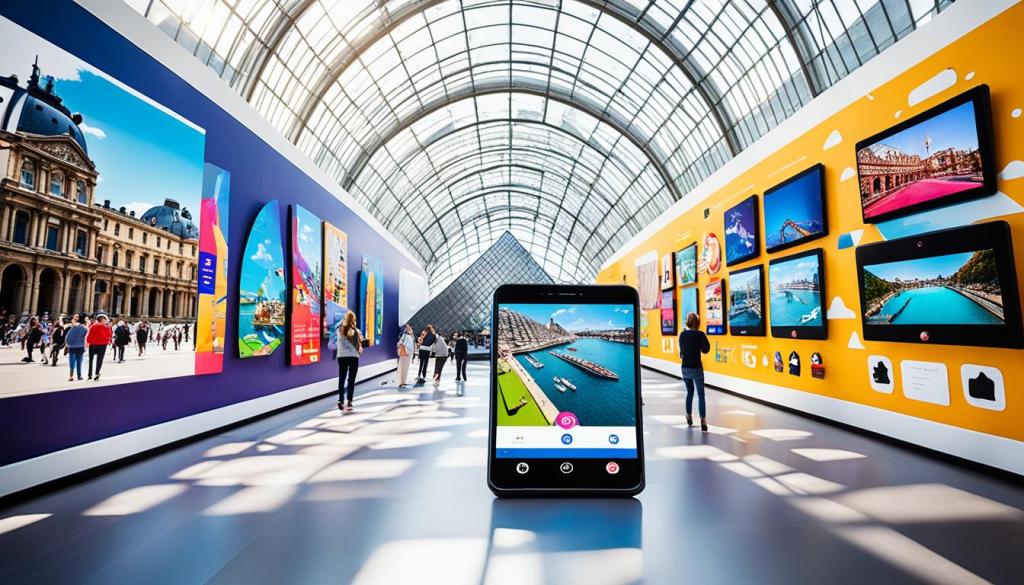
The Louvre, in the heart of Paris, is famous for its vast collection of historical art. To draw in visitors in a new way, the museum teamed up with the “Time Princess” app. They created the “Time Princess: Story Traveller” campaign.
This campaign lets players go on a journey through history. They can interact with art and figures from different eras. Players solve puzzles and complete quests related to the museum’s masterpieces. It’s a mix of storytelling, beautiful visuals, and game elements that makes it fun and educational.
This effort got a lot of attention and won awards. It brought in a new crowd of young visitors who might not have gone to an art museum before. The Louvre’s use of gamification has made art history more accessible and exciting.
The Australian National Maritime Museum’s “The Voyage”
In Australia, The Australian National Maritime Museum has also used gamification to improve the museum visit. Their online game, “The Voyage,” takes players on a virtual trip through convict history.
This game lets players make choices and face the challenges convicts did on their voyages to Australia. It’s been a hit, bringing in visitors and getting used in schools as a learning tool. By making history fun through gaming, the museum has found a new way to teach about Australia’s past.
The Impact of Gamifying the Tourism Experience
The Louvre and The Australian National Maritime Museum show how gamification can boost tourism. By tapping into gaming’s popularity, they’ve drawn in younger people and made museums more engaging.
Gamifying tourism has many benefits. It creates memorable experiences that stick with visitors. It also makes learning fun and easy to get into. With storytelling, great visuals, and interactive gameplay, these campaigns have changed how we interact with museums.
Overall, using gamification in tourism has been a smart move for museums. It helps them stay current and connect with a wide range of people. As technology gets better, we’ll likely see more travel campaigns that use gaming to improve the experience.
Podcasts as a Marketing Tool: The National Gallery of Art and the International Spy Museum
The National Gallery of Art and the International Spy Museum use podcasts to boost their marketing. They offer unique ways to connect with people through audio stories. These stories make history and art come alive for listeners.
The National Gallery of Art’s “Art + Ideas” Podcast
The “Art + Ideas” podcast by the National Gallery of Art combines art and sound. It explores how sight and sound connect. Museum experts host the show, diving deep into the collection and its stories.
Each episode focuses on a theme or artwork. It features interviews with artists, curators, and scholars. This podcast gives a new view on the museum’s collection.
This podcast has helped the National Gallery reach more people. Now, art lovers and curious minds worldwide can enjoy deep discussions about the museum’s collection.
The International Spy Museum’s “Spycast” Podcast
The “Spycast” podcast by the International Spy Museum takes you into the world of spies and espionage. It’s a journey through the secrets of the spy world. Listeners learn about the real-life stories of spies and their impact on history.
Experts in espionage share their stories and insights on the podcast. It’s a mix of history, storytelling, and the art of spying. This draws in a wide audience, from history fans to those interested in espionage.
The “Spycast” podcast has made the International Spy Museum more popular. It attracts people from all walks of life. The museum uses podcasts to offer engaging and educational content beyond its walls.
Podcasts have become a key marketing tool for the National Gallery of Art and the International Spy Museum. They use audio stories to reach new people and deepen connections with visitors. By promoting through podcasts, these museums make their content more accessible and appealing. This opens up new ways to explore art and history.
Finding Inspiration in Denver: Basecamp Denver Tourism Campaign
The Basecamp Denver Tourism Campaign is a standout in destination branding and experiential travel. It highlights Denver as the ideal spot for exploring the Rocky Mountains. The campaign takes viewers on a journey through Denver’s outdoor adventures and natural wonders.
This campaign uses a reality-show-style approach, featuring real people in outdoor activities. It makes viewers feel like they can relate to the people on screen. This sparks inspiration and a desire to explore Denver themselves.
It focuses on branding Denver as a destination. By showing off the city’s beauty, it makes Denver a top choice for those who love the outdoors and nature.
The campaign’s success was huge. It got a lot of attention and won awards for its fresh approach. It helped boost tourism in Denver and made it known as a place for adventure. Denver became seen as a spot for exciting experiences and memories.
The Positives:
The reality-show-style format makes the campaign relatable and engaging.
Showcases Denver’s natural beauty and the Rocky Mountains as a major attraction.
The campaign creates a personal connection with viewers, sparking a desire to explore Denver.
Won awards for its innovative approach and creative execution.
The Negatives:
Could have provided more detailed information about specific outdoor activities and attractions in Denver.
Targeted primarily at outdoor enthusiasts, may not have appealed to a wider audience.
The Basecamp Denver Tourism Campaign is a great example of how to inspire and engage travelers. By sharing real people’s experiences in Denver’s beautiful outdoors, it builds a strong emotional connection. It makes Denver the perfect basecamp for adventure in the Rocky Mountains.
Conclusion
This post has shown us the many ways to grab travelers’ attention and promote places. From the stunning “100% Pure New Zealand” campaign to the hands-on Swedish Number campaign, each one has its own way to stand out. They make people want to go on amazing trips.
Every campaign has its good and bad points. But, how well a campaign works depends on many things like who it’s for, how much money it has, and the culture. By looking at what worked and what didn’t, travel marketers can learn a lot.
These campaigns prove that telling stories, making a connection, and engaging people is key. But, not every campaign will be a hit right away. It takes a lot of planning, research, and knowing your audience to make a real impact. Also, it’s important to keep checking how well a campaign is doing. This helps to make changes and get better results.
In the end, the campaigns we’ve looked at offer great lessons for travel marketers. By using what they’ve learned and trying new things, they can make ads that really speak to people. This can lead to more people wanting to explore new places.
Tora Shir, translating to “raw mango slices,” is the latest iteration of a restaurant space that has undergone several transformations—first known as Firefly, then Tropica, and now Tora Shir. Each name has brought a different flavor to this South Goa locale, but this latest outing is a mix of hits and misses.
The ambience at Tora Shir is a blend of modern elegance and rustic charm. The bar, unchanged from its previous identities, still stands as a familiar centerpiece. The semi-outdoor seating, however, leaves something to be desired. While it offers a pleasant al fresco experience, the lighting is too dim, casting a melancholic shadow over what could be a vibrant space.
Service at Tora Shir is commendable. The waiters are attentive, friendly, and eager to assist, adding a positive note to the overall dining experience. Live music by a singing duo provides background entertainment. They were fair, but their performance was nothing remarkable, blending into the average atmosphere of the place.
The evening started with a vodka cocktail, a cocktail that failed to impress. It wasn’t bad, but it was utterly unremarkable, lacking the zest and creativity one hopes for in a signature drink. It was average and not to my preference.
The Popcorn Chicken, a dish that often pleases, was a miss. Though crispy, it was disappointingly bland, lacking the seasoning needed to make it memorable. It felt like an afterthought rather than a highlight.
Fortunately, the Goan roast sausages brought some redemption. The sausages were robustly flavored, with a perfect blend of smokiness and spice capturing the essence of Goan cuisine. Juicy and rich, they were complemented beautifully by caramelized onions and peppers, adding a sweet and tangy balance to the dish.
The Chilli Cheese Garlic Naan also impressive. The generous topping of gooey cheese, fiery chillies, and aromatic garlic on a soft and fluffy naan was a flavor bomb, standing out as a star attraction.
For dessert, we had the Mango Cheesecake, which was perhaps the best dish of the evening. Creamy and rich with a perfect balance of sweetness and tanginess, the cheesecake was a delightful end to the meal.
Tora Shir is not going down in the books as one of the best places to hang out on a Saturday night, but it does have its merits. If you’re looking for a place that spells average, Tora Shir is the epitome of this. It offers glimpses of greatness amidst a backdrop of mediocrity, making it a fair choice for a casual evening but not a must-visit destination in South Goa.
M. Night Shyamalan’s “Knock at the Cabin,” now streaming on Netflix, is a compelling addition to the horror-thriller genre, showcasing the director’s knack for building tension and delivering unexpected twists. The film, based on Paul Tremblay’s novel “The Cabin at the End of the World,” presents a unique narrative that intertwines apocalyptic dread with intimate character studies. In this review, we delve deep into the film’s thematic layers, character dynamics, and its broader implications in Shyamalan’s oeuvre.
A Fresh Twist on a Classic Trope
“Knock at the Cabin” opens with a seemingly familiar premise: a secluded cabin, a vacationing family, and an unexpected knock on the door. The protagonists, Eric (Jonathan Groff), Andrew (Ben Aldridge), and their adopted daughter Wen (Kristen Cui), find their peaceful retreat shattered by the arrival of four strangers led by Leonard (Dave Bautista). Unlike typical home invasion scenarios, these strangers claim they are on a mission to save the world from an impending apocalypse, demanding the family make a sacrificial choice to avert global catastrophe.
Shyamalan immediately sets the film apart from traditional horror by revealing this twist early on, allowing the story to focus on the psychological and moral dilemmas faced by the characters. The ambiguity of the strangers’ claims and their eerie sincerity create an atmosphere of relentless tension.
Character Dynamics and Performances
One of the film’s strengths lies in its well-crafted characters and the performances that bring them to life. Dave Bautista as Leonard delivers a standout performance, balancing menace with a surprising depth of empathy. Leonard’s character is the linchpin of the strangers’ group, which includes Sabrina (Nikki Amuka-Bird), Adriane (Abby Quinn), and Redmond (Rupert Grint). Each actor brings a unique vulnerability to their roles, making the intruders more than mere antagonists.
Jonathan Groff and Ben Aldridge, portraying Eric and Andrew, anchor the emotional core of the film. Their portrayal of a loving couple under extreme duress is both poignant and compelling. Kristen Cui’s performance as Wen is equally noteworthy, adding an innocent yet perceptive perspective to the unfolding chaos.
Themes of Belief and Sacrifice
“Knock at the Cabin” explores profound themes of belief, sacrifice, and the human condition. The film’s central question—whether the family’s sacrifice can truly prevent an apocalypse—serves as a vehicle for broader discussions about faith and skepticism. Eric and Andrew’s differing responses to the strangers’ demands reflect their individual coping mechanisms and worldviews, offering a microcosm of larger societal debates.
Shyamalan’s decision to adapt Tremblay’s novel allows for an exploration of how personal and collective fears manifest in times of crisis. The film raises unsettling questions about the nature of truth and the lengths to which individuals will go to protect their loved ones and their beliefs.
Visual and Atmospheric Mastery
Shyamalan’s direction, coupled with Jarin Blaschke’s cinematography, creates a visually arresting experience. The remote cabin setting, surrounded by dense woods, enhances the film’s claustrophobic tension. The use of natural light and shadow adds to the ominous atmosphere, making the cabin feel both isolated and intrusively exposed.
The film’s score, composed by Herdís Stefánsdóttir, complements the visual storytelling, heightening the suspense and emotional intensity. The sound design, featuring the eerie quiet of the forest and the sudden intrusions of violence, plays a crucial role in maintaining the film’s gripping tension.
Balancing Mysticism and Realism
One of the critiques often leveled at Shyamalan’s work is his propensity for incorporating mystical elements that can sometimes feel unbalanced within the narrative. In “Knock at the Cabin,” this mysticism is more subdued but still present, creating an underlying tension between reality and the supernatural. This ambiguity keeps viewers engaged, constantly questioning the true nature of the strangers’ mission and the veracity of their apocalyptic visions.
The film navigates this balance by grounding the mystical elements in the characters’ psychological states. The intruders’ fervent belief in their cause contrasts with Eric and Andrew’s skepticism, reflecting a broader societal tension between faith and rationality. This thematic complexity adds depth to the narrative, encouraging viewers to ponder the boundaries of belief and evidence.
Cultural and Social Implications
“Knock at the Cabin” also engages with contemporary social issues, subtly weaving them into its horror-thriller framework. The depiction of a same-sex couple at the film’s center is handled with sensitivity, highlighting their familial bond without reducing their characters to mere symbols. This representation is significant in a genre that has often marginalized LGBTQ+ characters.
The film’s exploration of apocalyptic fears taps into current global anxieties about climate change, pandemics, and political instability. The strangers’ extreme actions, motivated by their apocalyptic visions, echo real-world fears and the drastic measures some believe are necessary to avert disaster. This contemporary resonance adds a layer of relevance to the film’s horror, making it not only a psychological thriller but also a reflection on modern existential fears.
Conclusion: A Return to Form for Shyamalan
“Knock at the Cabin” marks a notable entry in M. Night Shyamalan’s filmography, showcasing his ability to blend psychological tension with deeper thematic inquiries. The film’s strength lies in its character-driven narrative, atmospheric tension, and the moral ambiguities it explores. While it may not fully satisfy all viewers, particularly those who prefer clear-cut resolutions, its open-ended nature invites ongoing discussion and interpretation.
For fans of Shyamalan’s earlier works like “The Sixth Sense” and “Unbreakable,” “Knock at the Cabin” offers a return to form, emphasizing storytelling and character over spectacle. It is a film that rewards attentive viewing, with each scene adding layers to the unfolding mystery and emotional depth. As “Knock at the Cabin” continues to find its audience on Netflix, it stands as a testament to Shyamalan’s enduring talent for crafting stories that linger long after the credits roll.
“Watching You” by Lisa Jewell is a gripping psychological thriller that delves into the complexities of suburban life, secrets, and the impact of obsession. Known for her adept storytelling and character-driven narratives, Jewell weaves a tale where every character harbors secrets, and every relationship is fraught with tension. Set in a picturesque English town, the novel unfolds through multiple perspectives, offering readers a voyeuristic glimpse into the lives of its residents, each connected by proximity and intrigue.
Plot Summary
The story revolves around a diverse cast of characters whose lives intertwine in unexpected and often sinister ways. Tom Fitzwilliam, a respected and charismatic headmaster, becomes the central figure of fascination for many in the neighborhood, including Joey Mullen, a young woman infatuated with him from afar. As Joey becomes more entangled in Tom’s life, she discovers unsettling truths about his behavior and his relationships with those around him.
Simultaneously, the novel explores the lives of other residents in the community, such as Jenna Tripp, a young newlywed whose marriage is tested by her unsettling obsession with Tom, and her brother Jack, who harbors suspicions about Tom’s intentions. Meanwhile, Freddie Fitzwilliam, Tom’s teenage son, navigates his own turbulent emotions and uncovers dark secrets that threaten to unravel his family’s carefully constructed facade.
The narrative builds tension steadily, alternating between past and present, gradually revealing the events leading up to a shocking incident that disrupts the town’s peace and exposes long-buried secrets. As the story unfolds, Jewell skillfully unravels the intricate connections between characters, exploring themes of deception, desire, and the consequences of unchecked obsession.
Themes Explored
Surveillance and Voyeurism
Central to the novel is the theme of surveillance and voyeurism, reflected in both literal and figurative senses. The title “Watching You” encapsulates the pervasive sense of scrutiny that pervades the characters’ lives, where everyone is watching and being watched. From the neighborhood gossip to hidden cameras and personal obsessions, Jewell explores the consequences of observing others and the distortions it creates in perceptions and relationships.
Secrets and Deception
The narrative thrives on secrets and deception, highlighting how even the most idyllic appearances can mask darker truths. Each character harbors secrets that slowly come to light, revealing their vulnerabilities and motivations. Jewell adeptly navigates the complexities of human nature, portraying characters who are morally ambiguous yet compelling in their flaws and desires.
Community and Isolation
Set against the backdrop of a close-knit community, the novel examines the paradox of connection and isolation. Despite living in proximity, characters often find themselves alienated and misunderstood, grappling with loneliness and longing for genuine connection. Jewell portrays the town as both a sanctuary and a prison, where relationships are fraught with tension and the desire for belonging clashes with the fear of exposure.
Character Analysis
Tom Fitzwilliam
Tom Fitzwilliam emerges as a complex and enigmatic figure whose charm and authority mask a darker side. As the headmaster of a local school, Tom is admired and respected by many, yet his relationships with women, including his wife and Joey Mullen, reveal a manipulative and controlling nature. His obsession with maintaining control over his image and personal life drives much of the novel’s tension, making him a compelling antagonist.
Joey Mullen
Joey Mullen serves as the novel’s unreliable narrator, driven by her infatuation with Tom and her determination to uncover the truth about him. As a newlywed struggling with her own insecurities and past trauma, Joey becomes increasingly entangled in a web of deceit and danger. Her perspective offers insights into the complexities of desire and obsession, highlighting the blurred boundaries between love and fixation.
Jenna and Jack Tripp
Jenna and Jack Tripp, siblings with a troubled past, provide contrasting perspectives on Tom Fitzwilliam. Jenna’s infatuation with Tom threatens her marriage and sanity, while Jack’s suspicions lead him to investigate Tom’s background, uncovering disturbing revelations. Their dynamic underscores the novel’s exploration of familial bonds and the impact of trauma on identity and relationships.
Freddie Fitzwilliam
Freddie Fitzwilliam, Tom’s teenage son, navigates adolescence amidst his family’s turmoil and his own secrets. As he grapples with conflicting emotions and loyalty, Freddie’s journey offers a poignant reflection on the consequences of parental influence and the search for autonomy.
Writing Style and Narrative Technique
Lisa Jewell’s narrative style is marked by its atmospheric prose and deft characterization. The novel unfolds through multiple viewpoints, each distinct and compelling in its portrayal of motivations and desires. Jewell employs a dual timeline structure, interspersing present-day events with flashbacks that gradually illuminate the characters’ histories and motivations. This technique enhances the suspense, allowing readers to piece together the puzzle of the characters’ lives while maintaining a sense of unease and anticipation.
Conclusion
“Watching You” by Lisa Jewell is a masterfully crafted psychological thriller that delves into the complexities of human nature, obsession, and the repercussions of secrets. With its richly drawn characters, atmospheric setting, and layered narrative, the novel captivates from start to finish, challenging readers to question perceptions and unravel the intricacies of interpersonal relationships. Lisa Jewell’s exploration of surveillance, deception, and community dynamics elevates “Watching You” beyond traditional thriller conventions, offering a nuanced portrayal of suburban life and the shadows that lurk beneath its surface.
Recommendation
For readers who enjoy psychological thrillers that delve into human psychology and interpersonal dynamics, “Watching You” is a must-read. Lisa Jewell’s compelling storytelling and skillful character development make it a standout in the genre, offering both suspenseful intrigue and thought-provoking insights into the complexities of desire and deception. Whether you’re drawn to mysteries or character-driven narratives, “Watching You” promises to keep you engaged until its riveting conclusion.
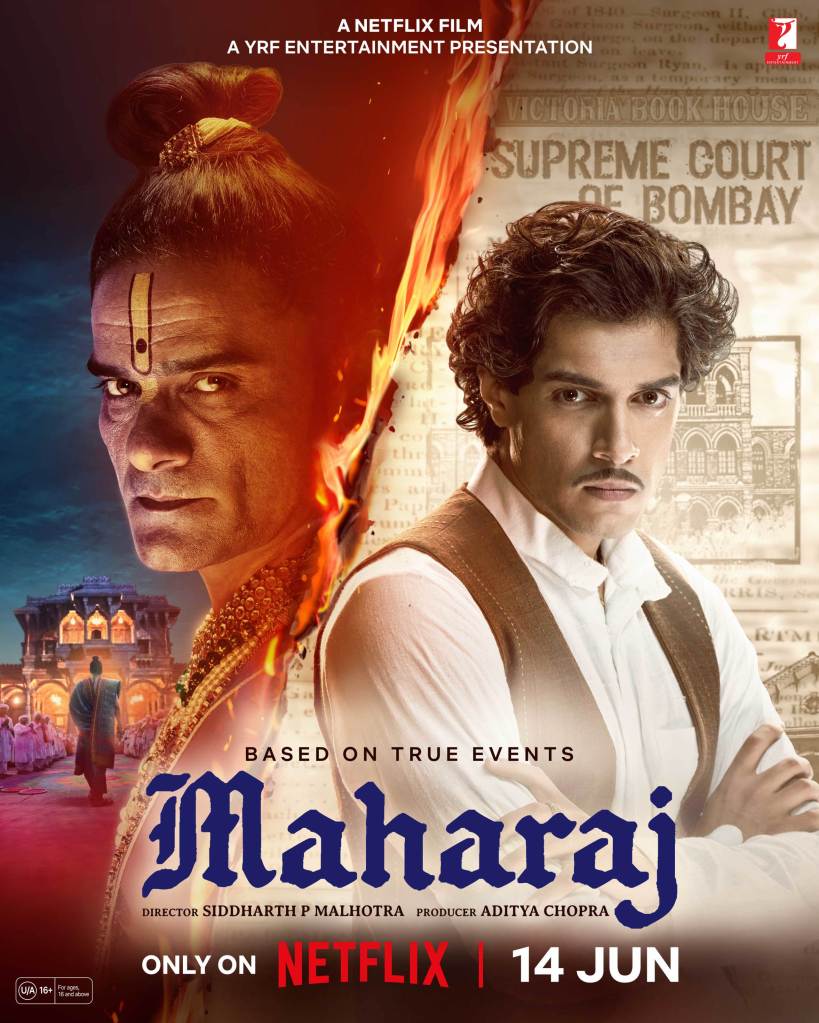
Title: Maharaj Producer: Aditya Chopra Director: Siddharth P. Malhotra Cast: Junaid Khan, Sharvari Wagh, Jaideep Ahlawat, Shalini Pandey Genre: Historical Drama
Summary
“Maharaj,” produced by the illustrious Aditya Chopra, marks a significant addition to the pantheon of historical dramas in Indian cinema. Directed by Siddharth P. Malhotra, the film embarks on a captivating journey into pre-independent India, focusing on the indomitable spirit of a young journalist challenging the entrenched structures of power and privilege. With a cast led by Junaid Khan, Sharvari Wagh, Jaideep Ahlawat, and Shalini Pandey, “Maharaj” aims to balance opulent storytelling with a socially conscious narrative. However, as with any cinematic endeavor, it has its share of strengths and weaknesses. This review delves into both aspects to provide a comprehensive analysis.
Plot and Script
The narrative of “Maharaj” is set in the late 19th century, a time when India was under the yoke of British colonial rule and various princely states. The film centers around Junaid Khan’s character, a young, idealistic journalist named Karsan Das who is committed to unveiling the truth and fighting for justice. His journey leads him to confront a powerful and corrupt maharaja, portrayed by Jaideep Ahlawat. Alongside him is Sharvari Wagh, playing a spirited activist who supports his quest for justice.
Positives:
Engaging Storyline: The plot is well-crafted, weaving together historical facts and fictional elements to create an engaging narrative. The scriptwriters have done a commendable job in maintaining the balance between drama and historical authenticity.
Character Development: The film excels in character development, particularly with the main characters though Kishori played by Shalini Pandey could have been better developed.
Historical Context: The incorporation of historical elements is seamless, providing an insightful look into the socio-political climate of the time. The film does not shy away from portraying the harsh realities of colonial rule and the oppressive practices of some princely states.
Negatives:
Predictability: While the storyline is engaging, it does fall into predictability at times. Some plot twists and resolutions are foreseeable, which slightly diminishes the suspense.
Pacing Issues: The film’s pacing is uneven in parts. While certain scenes are gripping and fast-paced, others tend to drag, particularly in the second half.
Performances
Positives:
Junaid Khan: In his debut role, Junaid Khan delivers a promising performance. He portrays Karsan’s idealism and determination convincingly, showing a range of emotions from fiery passion to some vulnerable moments.
Sharvari Wagh: Sharvari brings a blend of grace and strength to her character. Her chemistry with Junaid is palpable, and her performance adds depth to the narrative.
Jaideep Ahlawat: Jaideep’s portrayal of the Maharaj is one of the highlights of the film. He embodies the character with a menacing presence, capturing both the charisma and the cruelty of his role.
Shalini Pandey: In a supporting role, Shalini adds nuance to the story. Her performance, though less prominent, is impactful and contributes to the overall emotional weight of the film.
Negatives:
Inconsistencies in Performance: Certain scenes suffer from overacting, which detracts from the film’s overall impact. I felt that Junaid’s long court speech could have benefited from a bit more control.
Character Depth: While the protagonists are well-developed, some secondary characters lack depth. They serve more as plot devices rather than fully fleshed-out individuals, which can make certain interactions feel superficial.
Direction and Cinematography
Positives:
Siddharth P. Malhotra’s Direction: Malhotra’s direction is commendable. He successfully captures the essence of the era, blending historical authenticity with cinematic flair. His vision for the film is clear and well-executed.
Visual Splendor: The cinematography is breathtaking. The film’s visual appeal is heightened by stunning shots of palaces, vibrant marketplaces, and the stark realities of rural India. Each frame is meticulously crafted, contributing to the film’s grandeur.
Attention to Detail: The set design, costumes, and props are meticulously detailed, enhancing the film’s authenticity. The rich cultural tapestry of the period is vividly brought to life, immersing the audience in the historical setting.
Negatives:
Overuse of Dramatic Elements: At times, the direction leans too heavily on dramatic elements, which can feel exaggerated. Some scenes are overly dramatized, potentially alienating viewers who prefer subtlety.
Inconsistent Tone: The film occasionally struggles with maintaining a consistent tone. While it aims to blend drama with historical realism, the shifts between these elements are not always smooth.
Music and Sound
Positives:
Complementary Soundtrack: The soundtrack is a perfect complement to the film’s narrative. Composed by a talented ensemble, the music is rooted in classical Indian tunes, elevating the emotional impact of the story.
Negatives:
Overwhelming Score in Parts: While the background score is generally effective, there are instances where it feels overwhelming. Certain scenes are accompanied by overly loud music, which can distract from the dialogue and action.
Lack of Memorable Songs: Despite the overall quality of the music, the film lacks truly memorable songs. While the compositions are fitting, they do not leave a lasting impression on the audience.
Themes and Impact
Positives:
Social Relevance: “Maharaj” delves deep into themes of justice, integrity, and the timeless battle between the powerful and the oppressed. These themes resonate with contemporary issues, making the film relevant despite its historical setting.
Encourages Reflection: The film encourages viewers to reflect on the past while drawing parallels to present-day societal structures. It prompts important questions about power, privilege, and the fight for justice.
Inspirational Message: The story of Karsan’s unwavering quest for truth and justice is inspirational. It serves as a reminder of the importance of standing up against corruption and oppression, regardless of the odds.
Negatives:
Didactic Moments: While the film’s themes are impactful, there are moments where the messaging feels didactic. Certain dialogues and scenes come across as preachy, which can detract from the overall storytelling.
Simplistic Depictions: The film occasionally resorts to simplistic depictions of complex issues. While it addresses important themes, it sometimes lacks the depth and nuance needed to fully explore these topics.
Conclusion
“Maharaj” is a compelling addition to the canon of historical dramas in Indian cinema. Aditya Chopra’s vision, combined with Siddharth P. Malhotra’s direction and stellar performances from the cast, makes it a significant and memorable film. The movie’s strengths lie in its engaging storyline, strong performances, and stunning visuals. It offers a powerful narrative that resonates with contemporary themes of justice and integrity, encouraging viewers to reflect on historical and present-day issues.
However, the film is not without its flaws. Predictability in the plot, pacing issues, unnecessary songs and occasional inconsistencies in performance and tone are notable drawbacks. Additionally, the film’s messaging can feel overly didactic at times, and some characters lack depth.
Despite these shortcomings, “Maharaj” succeeds in delivering an impactful cinematic experience. It is a testament to the enduring spirit of resistance and the quest for truth, making it a film worth watching for its narrative strength, visual splendor, and powerful performances.
Advertising agencies have long been the powerhouse behind brand promotions, creative campaigns, and marketing strategies. However, with the rapid evolution of technology, changing consumer behaviors, and the rise of digital platforms, there is a growing discourse on whether traditional advertising agencies are facing an existential threat. This critical analysis will explore the current state of advertising agencies, the challenges they face, the opportunities for evolution, and what the future might hold for these industry giants.
The Historical Context of Advertising Agencies
Advertising agencies have played a crucial role in shaping consumer culture since the late 19th century. From the golden age of print and radio ads to the television boom of the mid-20th century, agencies have been at the forefront of connecting brands with consumers. The traditional model relied heavily on mass media to deliver messages to a broad audience, using creativity and strategic planning to craft compelling campaigns.
The Rise of Digital Marketing
The advent of the internet and digital technology has drastically altered the advertising landscape. Digital marketing offers precise targeting, real-time analytics, and a level of interactivity that traditional media cannot match. Social media platforms, search engines, and programmatic advertising have become dominant channels, enabling brands to reach consumers directly and engage with them in more personalized ways.
Key Changes Brought by Digital Marketing
Data-Driven Marketing: The ability to collect and analyze vast amounts of data has revolutionized how marketing strategies are developed. Brands can now tailor their messages based on consumer behavior, preferences, and demographics.
Cost Efficiency: Digital marketing campaigns can be more cost-effective compared to traditional media buys. Pay-per-click (PPC), social media ads, and content marketing often yield higher returns on investment (ROI).
Real-Time Feedback and Adjustments: Digital platforms allow for immediate feedback on campaign performance. This real-time data enables marketers to tweak strategies and optimize outcomes quickly.
Direct-to-Consumer (DTC) Relationships: Brands can now build direct relationships with their consumers through social media, email marketing, and personalized content, reducing the need for intermediary agencies.
Challenges Facing Traditional Advertising Agencies
1. Technological Disruption
The shift to digital has disrupted the traditional advertising agency model. Agencies that were once experts in print, radio, and TV now need to pivot towards digital expertise. This transition requires significant investment in new technology and talent, which can be a daunting task for established firms with legacy systems.
2. Changing Consumer Behavior
Today’s consumers are more informed and empowered. They actively seek out information, read reviews, and rely on peer recommendations before making purchasing decisions. Traditional advertising’s one-way communication model is less effective in an era where engagement and conversation are key.
3. Rise of In-House Agencies
Many brands are bringing their advertising capabilities in-house. By developing internal marketing teams, companies can reduce costs, have more control over their brand voice, and respond more quickly to market changes. High-profile brands like Unilever and PepsiCo have successfully shifted to this model, posing a significant challenge to traditional agencies.
4. Competition from Digital and Specialist Agencies
The rise of digital marketing has given birth to a new breed of specialist agencies focusing on SEO, PPC, social media, content marketing, and influencer marketing. These nimble, focused firms often provide more innovative and cost-effective solutions compared to traditional full-service agencies.
5. Erosion of Trust
High-profile scandals and issues with transparency, particularly concerning digital ad fraud and the opaque nature of programmatic advertising, have led to a decline in trust between brands and agencies. This erosion of trust makes it harder for traditional agencies to maintain long-term client relationships.
Opportunities for Evolution
Despite these challenges, traditional advertising agencies are not necessarily on the brink of extinction. Instead, they are presented with opportunities to evolve and adapt to the changing landscape.
1. Embracing Digital Transformation
Agencies must invest in digital tools and talent to stay relevant. This includes adopting advanced analytics, AI, and machine learning to deliver more precise and effective campaigns. Integrating digital capabilities with traditional strengths in creative and strategic thinking can provide a competitive edge.
2. Focusing on Integrated Marketing Communications
Offering integrated marketing solutions that encompass both traditional and digital channels can help agencies provide more comprehensive services to clients. By breaking down silos and ensuring consistent messaging across all touchpoints, agencies can enhance brand coherence and impact.
3. Enhancing Creative and Strategic Offerings
While technology is crucial, creativity and strategic insight remain the core strengths of traditional agencies. Emphasizing these areas and showcasing how they can amplify digital efforts can differentiate agencies from purely digital firms.
4. Building Stronger Client Relationships
Agencies need to focus on transparency, trust, and collaboration. Providing clear metrics, being upfront about costs, and working closely with clients to align on goals and expectations can help rebuild and strengthen client relationships.
5. Specializing in Niche Markets
Finding and capitalizing on niche markets or industries can provide growth opportunities. Whether it’s healthcare, technology, or sustainable brands, focusing on specific sectors can allow agencies to develop deep expertise and offer tailored solutions.
6. Leveraging Data and Analytics
Agencies can harness the power of data and analytics to provide insights-driven campaigns. By combining big data with creative expertise, agencies can offer clients measurable results and optimize campaigns in real-time.
Case Studies of Successful Agency Transformations
Ogilvy
Ogilvy, one of the most renowned advertising agencies, has embraced digital transformation by integrating digital services into its core offerings. They have invested in data analytics, digital media, and performance marketing while maintaining their strong creative roots. This approach has allowed Ogilvy to remain relevant and competitive in a rapidly changing market.
Wieden+Kennedy
Wieden+Kennedy, known for its groundbreaking campaigns for Nike, has successfully navigated the digital shift by focusing on storytelling and brand experience. They have expanded their digital capabilities while continuing to produce iconic creative work, demonstrating that traditional creative excellence can coexist with digital innovation.
Accenture Interactive
Accenture Interactive, originally a consulting firm, has grown into one of the largest digital agencies through strategic acquisitions and investments in digital talent. Their focus on end-to-end customer experience and digital transformation services has positioned them as a leader in the new advertising landscape.
The Future of Advertising Agencies
The future of advertising agencies will likely be a blend of traditional and digital approaches. Agencies that can seamlessly integrate data-driven insights with creative storytelling will thrive. Here are some trends to watch:
1. Personalization at Scale
With advancements in AI and machine learning, agencies will be able to deliver highly personalized content at scale. This means creating tailored experiences for individual consumers based on their preferences, behaviors, and interactions with the brand.
2. Omnichannel Marketing
Consumers interact with brands across multiple touchpoints, from social media to in-store experiences. Agencies that can provide seamless and consistent messaging across all these channels will have a competitive advantage.
3. Purpose-Driven Marketing
Brands are increasingly expected to stand for something beyond profit. Agencies that can help brands articulate and act on their purpose, creating authentic and impactful campaigns, will resonate with modern consumers who value transparency and social responsibility.
4. Content Creation and Curation
As content continues to be king, agencies that excel in creating high-quality, engaging content will be in demand. This includes not only traditional ads but also branded content, social media posts, videos, podcasts, and more.
5. Collaboration and Co-Creation
The line between agencies and clients is blurring. Collaborative approaches where agencies work closely with in-house teams, other agencies, and even consumers to co-create campaigns will become more common.
6. Focus on Customer Experience
Agencies will increasingly focus on the entire customer journey, ensuring that every touchpoint, from initial awareness to post-purchase interactions, delivers a positive and cohesive experience.
Notable Creative Digital Campaigns
1. Nike: “Dream Crazy”
Nike’s “Dream Crazy” campaign, featuring Colin Kaepernick, became an instant viral sensation. Created by Wieden+Kennedy, the campaign leveraged the power of social media to spark conversations about social justice and brand values. The emotional storytelling, combined with bold visuals, resonated deeply with consumers, showcasing the impact of purpose-driven marketing.
2. Old Spice: “The Man Your Man Could Smell Like”
Old Spice’s campaign, “The Man Your Man Could Smell Like,” transformed the brand’s image and revitalized its market presence. The humorous and quirky ads, starring Isaiah Mustafa, became a cultural phenomenon. The campaign’s success was amplified by its interactive social media strategy, where Mustafa responded to fans in real-time through personalized video messages.
3. Dove: “Real Beauty Sketches”
Dove’s “Real Beauty Sketches” campaign, created by Ogilvy, highlighted the disparity between how women see themselves and how others see them. The emotionally powerful video went viral, earning millions of views and sparking a global conversation about self-esteem and beauty standards. The campaign’s success lay in its authentic message and relatable content.
4. Always: “#LikeAGirl”
Always’ “#LikeAGirl” campaign, developed by Leo Burnett, tackled gender stereotypes by redefining the phrase “like a girl.” The compelling video featured girls and women of all ages discussing and demonstrating what it means to do things “like a girl.” The campaign’s impact was magnified by its strong social media presence and engagement with audiences on issues of gender equality.
5. Heineken: “Worlds Apart”
Heineken’s “Worlds Apart” campaign by Publicis London brought together people with opposing views for a conversation over a beer. The campaign focused on promoting openness and understanding, encouraging people to find common ground despite their differences. The heartfelt and thought-provoking video resonated widely, garnering praise for its positive social message.
Conclusion
While traditional advertising agencies face significant challenges in the digital age, they are far from dying. By embracing digital transformation, focusing on creativity and strategy, and building stronger client relationships, agencies can adapt and thrive. The future of advertising will be shaped by those who can seamlessly integrate data-driven insights with creative storytelling, delivering personalized and impactful campaigns across multiple channels. As long as agencies continue to evolve and innovate, they will remain an essential part of the marketing ecosystem.
Author: Lisa Jewell Genre: Psychological Thriller, Mystery
Plot Synopsis:
“The Family Upstairs” by Lisa Jewell is a spellbinding psychological thriller that masterfully intertwines the lives of multiple characters, all connected by a sinister past. The story kicks off with Libby Jones, a 25-year-old woman whose life takes an unexpected turn when she inherits a mansion in Chelsea. Little does she know, this inheritance comes with a dark and complex family history that begins to unravel as she delves deeper into the mansion’s past.
Libby’s inheritance triggers a series of events that link her to a chilling narrative involving the Lamb family and the enigmatic residents who once lived in her newly acquired home. The novel seamlessly transitions between the past and the present, revealing the chilling events that transpired in the house decades ago. As Libby uncovers more about her family’s history, she is drawn into a web of secrets, lies, and shocking revelations.
Characters:
Libby Jones: The protagonist, a young woman whose life changes drastically when she inherits the mansion. Libby’s character is relatable and grounded, serving as the reader’s entry point into the dark and twisted history of the house. Her curiosity and determination to uncover the truth drive the narrative forward.
Henry Lamb: A teenager in the past timeline who witnesses the horrific events unfold in the house. Henry’s perspective provides a chilling and intimate look at the sinister happenings within the mansion. His complex relationship with his family and the outsiders who infiltrate their home adds depth to the story.
Lucy Lamb: Henry’s sister, whose current struggles are tied to the secrets of the mansion. Lucy’s character is resilient and resourceful, navigating a difficult life while being haunted by her past. Her journey from destitution to confronting her family’s history is both heartbreaking and inspiring.
Phin Thomsen: A charismatic and enigmatic figure from the past, Phin’s presence in the Lamb household introduces a sense of danger and intrigue. His relationship with Henry and the other residents of the house adds another layer of complexity to the narrative.
David Thomsen: Phin’s father, whose arrival at the Lamb household sets off a chain of events that lead to the family’s downfall. David’s manipulative and controlling nature makes him a central antagonist in the story, embodying the darkness that pervades the mansion.
Sally Thomsen: David’s wife and Phin’s mother, Sally is a tragic figure caught in the crossfire of her husband’s schemes and the ensuing chaos in the house. Her character highlights the themes of control and victimization that run throughout the novel.
Writing Style and Pacing:
Lisa Jewell’s writing is taut and evocative, creating a sense of foreboding that lingers throughout the book. Her narrative style is engaging, with a perfect balance between descriptive passages and dialogue. The pacing is meticulously controlled, with each chapter ending on a cliffhanger that propels the reader forward. Jewell’s ability to switch between multiple timelines and perspectives without losing coherence is commendable, adding layers of complexity to the narrative.
Jewell’s prose is both elegant and accessible, drawing readers into the world she has created. Her vivid descriptions of the mansion and its surroundings paint a haunting picture, while her insightful characterizations bring each individual to life. The dialogue is sharp and realistic, capturing the tension and emotion of each interaction.
Themes:
“The Family Upstairs” explores themes of family, identity, and the lingering impact of childhood trauma. It delves into the darkness that can lie beneath the surface of seemingly perfect lives and homes. The novel also touches on issues of control, manipulation, and the desperate lengths people will go to protect their secrets.
Family and Identity: The novel examines the complexities of family relationships and the impact they have on individual identity. Libby’s quest to uncover her family’s past is also a journey of self-discovery, as she learns about her origins and what they mean for her present and future.
Childhood Trauma: The experiences of Henry and Lucy in the Lamb household highlight the long-lasting effects of childhood trauma. Their struggles to cope with their past and the ways it has shaped their lives are central to the narrative.
Control and Manipulation: The character of David Thomsen embodies the theme of control, as he exerts his influence over the Lamb family and the other residents of the house. His manipulative tactics and the resulting power dynamics are a critical aspect of the story.
Secrets and Lies: The novel is filled with secrets and lies, as characters conceal their true intentions and past actions. The unraveling of these secrets drives the plot and adds to the suspense.
Survival and Resilience: Despite the darkness that permeates the story, there are also themes of survival and resilience. Characters like Lucy demonstrate remarkable strength in the face of adversity, offering a glimmer of hope amidst the chaos.
Atmosphere and Setting:
The setting of the mansion in Chelsea plays a crucial role in the novel. The house is almost a character in itself, with its dark history and hidden secrets. Jewell’s descriptions of the mansion create an eerie and claustrophobic atmosphere that enhances the sense of dread and mystery.
The mansion’s opulent but decaying interior reflects the downfall of the Lamb family and the secrets that lie within its walls. The contrast between the house’s former grandeur and its current state of disrepair symbolizes the disintegration of the family’s facade and the unraveling of their hidden truths.
The novel’s London setting adds to the atmosphere, with the city’s vibrant and diverse backdrop juxtaposed against the insular and oppressive environment of the mansion. Jewell captures the essence of London life, from the bustling streets to the hidden corners where secrets fester.
Conclusion:
“The Family Upstairs” is a masterfully crafted psychological thriller that keeps readers on the edge of their seats from start to finish. Lisa Jewell weaves a complex web of suspense and intrigue, delivering a story that is both chilling and deeply emotional. The novel’s intricate plot, well-drawn characters, and atmospheric setting make it a standout in the genre.
Jewell’s ability to create multifaceted characters and interweave their stories with such precision is a testament to her skill as a storyteller. Each revelation and twist is carefully placed, maintaining the tension and keeping readers guessing until the very end.
Overall, “The Family Upstairs” is a must-read for fans of psychological thrillers. It’s a book that will linger in your mind long after you’ve turned the last page, leaving you eagerly anticipating Lisa Jewell’s next masterpiece. Whether you’re drawn to tales of family secrets, psychological suspense, or intricate mysteries, this novel offers a compelling and satisfying read.
Pens, despite being simple writing instruments, have transcended their primary function to become symbols of status, style, and sophistication. Several pen brands have achieved iconic status through strategic advertising and innovative marketing. Let’s explore the biggest brands in the pen industry, their market perceptions, and the advertising and marketing strategies that have propelled them to cult status, including notable figures who endorse these brands and the specific models used in their advertising campaigns.
1. Montblanc: The Pinnacle of Luxury
Perception
Montblanc is synonymous with luxury, elegance, and exclusivity. Owning a Montblanc pen is seen as a status symbol, a reflection of success and refined taste.
Marketing Strategies
Exclusivity and Prestige: Montblanc has positioned itself as a luxury brand through limited editions, collaborations with artists, and high-profile endorsements.
Storytelling: The brand crafts compelling narratives around each pen, often linking them to historical figures, literary icons, or cultural milestones.
Heritage and Craftsmanship: Montblanc emphasizes its heritage and the meticulous craftsmanship involved in making each pen, appealing to consumers who value tradition and quality.
Advertising Tactics
High-End Media: Montblanc advertises in luxury magazines and high-profile events, targeting affluent consumers.
Celebrity Endorsements: Hugh Jackman, a globally recognized actor, has been seen using Montblanc pens, lending his sophisticated image to the brand.
Experiential Marketing: Montblanc offers personalized experiences, such as bespoke pen services and exclusive events, creating a strong emotional connection with customers.
Price Range
$200 – $100,000+: Montblanc pens range from their entry-level models to highly exclusive limited editions.
Advertising Campaigns
“Montblanc: The Art of Writing”: Featuring actor Hugh Jackman, this campaign highlights the brand’s dedication to craftsmanship and luxury. Jackman’s sophisticated image aligns perfectly with Montblanc’s brand values.
“A Tribute to Shakespeare”: Celebrating the 400th anniversary of Shakespeare’s death, Montblanc released a limited edition pen. The campaign focused on the literary heritage and craftsmanship of the pen, appealing to cultural and intellectual elites.
Notable Models
Montblanc Meisterstück: This classic model has been featured prominently in Montblanc’s advertising, symbolizing timeless elegance and quality.
2. Parker: The Classic Choice
Perception
Parker pens are perceived as reliable, classic, and professional. They are often associated with academic achievement and corporate success.
Marketing Strategies
Innovation and Quality: Parker highlights its long history of innovation in pen technology and commitment to quality.
Educational Partnerships: The brand partners with educational institutions and professional organizations, reinforcing its image as a tool for success.
Timeless Design: Parker’s marketing often focuses on its timeless designs, appealing to both traditionalists and modern consumers.
Advertising Tactics
Historical Campaigns: Parker uses its rich history in advertising, showcasing its evolution and the notable figures who have used its pens.
Global Reach: The brand’s advertising campaigns are tailored to different markets, maintaining a consistent global presence.
Social Proof: Former British Prime Minister Margaret Thatcher was known to use Parker pens, enhancing the brand’s association with leadership and reliability.
Price Range
$20 – $600+: Parker offers a range of products from affordable everyday pens to high-end luxury models.
Advertising Campaigns
“Make Your Mark”: This campaign focused on Parker’s long-standing history and its use by notable historical figures like former British Prime Minister Margaret Thatcher. It emphasized reliability and legacy.
“Write Your Future”: Targeting students and professionals, this campaign showcased the Parker Jotter as a tool for success and personal achievement.
Notable Models
Parker Jotter: A favorite among professionals, the Jotter has been featured in numerous advertisements, emphasizing its practicality and enduring appeal.
3. Cross: The Professional’s Companion
Perception
Cross is viewed as a symbol of professionalism and reliability. It is often chosen for its sleek design and dependable performance.
Marketing Strategies
Corporate Gifting: Cross is heavily marketed as an ideal corporate gift, strengthening its association with professionalism and corporate culture.
Design and Innovation: The brand continually innovates in design, blending modern aesthetics with functionality.
Heritage: Cross leverages its long history and American roots to appeal to a sense of tradition and trust.
Advertising Tactics
Business Publications: Advertising in business magazines and platforms where professionals are the primary audience.
Partnerships and Sponsorships: Collaborations with business events, conferences, and industry awards to reach a targeted audience.
Digital Marketing: Utilizing social media and digital platforms to engage with younger professionals and tech-savvy consumers.
Price Range
$30 – $500+: Cross pens range from accessible professional models to premium executive pens.
Advertising Campaigns
“Life, Crafted”: Featuring former First Lady Michelle Obama, this campaign highlights the Cross pen as a tool for professional and personal milestones.
“Signature Moments”: Showcasing the Cross Century II, this campaign focuses on the significant moments in life where a Cross pen plays a part, from signing important documents to personal journaling.
Notable Models
Cross Century II: Known for its sleek design, the Century II is often highlighted in Cross’s advertising campaigns as the epitome of professional elegance.
Celebrity Endorsement
Michelle Obama: The former First Lady has been photographed using Cross pens, reinforcing the brand’s image of professionalism and class.
4. Lamy: The Modern Minimalist
Perception
Lamy is known for its minimalist design, functionality, and German engineering. It appeals to design enthusiasts and those who appreciate simplicity and innovation.
Version 1.0.0
Marketing Strategies
Design-Centric Approach: Lamy’s marketing focuses on its award-winning designs and the philosophy of ‘form follows function.’
Educational Initiatives: The brand partners with design schools and educational institutions, fostering a new generation of designers and writers.
Sustainability: Lamy emphasizes sustainable practices and refillable systems, appealing to environmentally conscious consumers.
Advertising Tactics
Design Awards and Recognition: Highlighting the numerous design awards Lamy has won, showcasing its commitment to aesthetics and innovation.
Creative Campaigns: Using creative and visually striking advertising campaigns that resonate with design-conscious consumers.
Community Engagement: Engaging with the design and writing communities through workshops, exhibitions, and social media interactions.
Price Range
$20 – $300+: Lamy pens are available in a wide range of prices, making them accessible to both students and professionals.
Advertising Campaigns
“Think With Your Hands”: Featuring Tim Brown, CEO of IDEO, this campaign emphasizes the creative process and design thinking, showcasing Lamy as the pen of choice for designers and thinkers.
“Form Follows Function”: Highlighting Lamy’s award-winning designs, this campaign focuses on the brand’s philosophy of functional design and engineering excellence.
Notable Models
Lamy Safari: A favorite among students and designers, the Safari is featured prominently in Lamy’s marketing for its bold design and functionality.
Celebrity Endorsement
Tim Brown: The CEO of IDEO, known for his emphasis on design thinking, has publicly endorsed Lamy pens, aligning with the brand’s design-centric ethos.
5. Pilot: The Everyday Essential
Perception
Pilot pens are seen as affordable, versatile, and innovative. They are popular among students, professionals, and artists for their wide range of products.
Marketing Strategies
Product Diversity: Pilot offers a wide range of pens catering to different needs, from everyday writing to creative projects.
Innovation: The brand consistently introduces new technologies, such as erasable ink and precision tips, staying ahead of competitors.
Affordability: Pilot maintains a balance between quality and affordability, making it accessible to a broad audience.
Advertising Tactics
Educational and Office Supplies: Advertising in contexts where students and office workers are the primary audience, such as back-to-school campaigns.
Influencer Collaborations: Partnering with influencers and artists who showcase Pilot pens in creative and educational contexts.
Digital Campaigns: Leveraging social media and online platforms to reach a younger, tech-savvy audience.
Price Range
$2 – $50+: Pilot offers an extensive range of pens, from budget-friendly options to more specialized models.
Advertising Campaigns
“Power to the Pen”: Featuring acclaimed author Neil Gaiman, this campaign highlights the Pilot G2 as the pen for creatives and professionals who need reliability and performance.
“Write with Precision”: Targeting students and office workers, this campaign emphasizes the precision and smooth writing experience of Pilot pens, particularly the Pilot Precise V5.
Notable Models
Pilot G2: Known for its smooth writing and reliability, the G2 is featured in Pilot’s advertising campaigns targeting students and professionals alike.
Celebrity Endorsement
Neil Gaiman: The acclaimed author has expressed his preference for Pilot pens, particularly the G2, adding a creative and literary appeal to the brand.
The biggest pen brands have achieved cult status through a combination of strategic marketing, innovative advertising, and a deep understanding of their target audiences. Montblanc, Parker, Cross, Lamy, and Pilot each have unique perceptions and strategies that cater to different segments of the market. By emphasizing their strengths—whether it’s luxury, professionalism, design, or innovation—these brands have successfully carved out their niches and built lasting legacies in the world of writing instruments.
Among these campaigns, Montblanc’s “The Art of Writing” stands out as the best. This campaign’s success lies in its masterful blend of celebrity endorsement, storytelling, and luxury branding.
Featuring Hugh Jackman, a globally recognized actor known for his sophistication and charm, this campaign instantly captured the attention of a broad audience. Jackman’s association with Montblanc enhances the brand’s image of elegance and success.
Montblanc’s campaign doesn’t just sell pens; it sells a lifestyle. By crafting a narrative around the artistry and craftsmanship involved in creating each pen, the campaign taps into the emotional appeal of owning a Montblanc. This approach resonates deeply with consumers who value heritage, tradition, and meticulous craftsmanship.
The advertising emphasizes the exclusivity and prestige of its products. The use of high-quality visuals, sophisticated settings, and a focus on the brand’s history and heritage creates a sense of aspiration among consumers. The message is clear: owning a Montblanc pen is a mark of success and refined taste.
The campaign’s impact is evident in Montblanc’s sustained position as a market leader in luxury writing instruments. It has effectively reinforced the brand’s perception as the pinnacle of elegance and quality, attracting a loyal customer base willing to invest in these premium products.
In conclusion, Montblanc’s “The Art of Writing” campaign exemplifies how effective advertising can elevate a brand to cult status. By leveraging celebrity influence, compelling storytelling, and luxury branding, Montblanc has set a benchmark in the world of advertising and marketing for pen brands. This campaign not only showcases the product but also encapsulates the essence of what makes Montblanc a symbol of sophistication and success.